
On this page
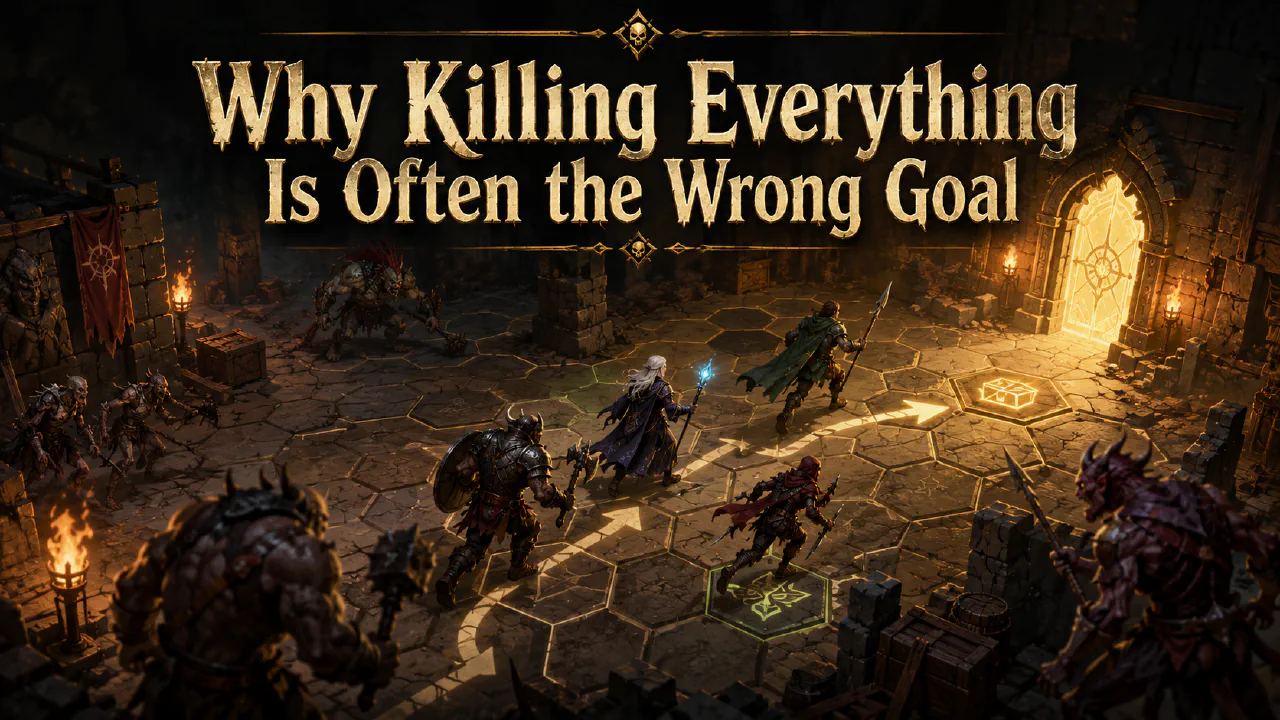
One of the biggest mindset shifts in Gloomhaven is realizing that the game is not always asking you to defeat every enemy.
It often looks like that is the goal. There are monsters on the board. They are attacking you. Your cards have attacks on them. So naturally, new players assume the correct plan is:
Kill everything, then move on.
Sometimes that works.
But in many scenarios, trying to kill every monster is exactly why you lose.
Gloomhaven is not just a tactical combat game. It is a scenario objective game. Every turn, card, rest, movement point, and lost card should be measured against one question:
Does this help us complete the scenario before we run out of resources?
If the answer is no, even a successful attack might be the wrong play.
The Scenario Objective Is the Real Goal
Before the first round starts, read the scenario goal carefully.
Not the flavor text. Not the map. Not the enemies.
The goal.
Some scenarios ask you to:
- Kill all enemies
- Reach an exit
- Defend an objective
- Destroy a specific target
- Loot or interact with something
- Survive for a certain number of rounds
- Escape before enemies overwhelm you
If the goal is “kill all enemies,” then yes, defeating monsters is the path to victory.
But if the goal is something else, monsters are often obstacles, not the actual objective.
That distinction matters.
Monsters Are Usually a Cost, Not the Point
Every enemy you fight costs something.
It may cost:
- Actions
- Cards
- Hit points
- Movement
- Initiative flexibility
- Lost cards
- Time
Even if you win the fight, you may still lose the scenario because the fight consumed too much of your limited stamina.
This is one of the hardest lessons for new players.
A dead monster feels like progress. But if killing that monster took two rounds and did not help you reach the objective, it may have quietly pushed you closer to exhaustion.
Your Cards Are the Real Clock
In Gloomhaven, your hand of cards is not just your list of abilities. It is also your lifespan.
Every round you play brings you closer to resting. Every rest reduces your available cards. Every lost card shortens your scenario.
That means time matters even in scenarios without a visible timer.
If you spend too many turns clearing enemies that do not matter, you may arrive at the real objective with too few cards left to finish.
This is why “playing safely” can still lose.
You protected your health.
You killed the enemies.
You made careful choices.
But you spent too many turns doing it.
When Killing Everything Is the Wrong Instinct
Killing enemies becomes a trap when:
- The enemies are far away from the objective
- They are too slow to catch you
- They are already blocked or controlled
- They are behind you
- They require too many actions to defeat
- The scenario has a tight time limit
- New enemies keep spawning
- The goal is to escape, defend, or interact
In these cases, killing monsters can feel productive while actually slowing you down.
A better question is:
What happens if we ignore this enemy?
If the answer is “not much,” then you may not need to fight it.
Not Every Enemy Deserves Your Cards
Some enemies must be dealt with immediately.
High-priority enemies include:
- Monsters blocking your path
- Enemies threatening an objective
- Ranged attackers pressuring fragile characters
- Fast enemies that can catch up to you
- Monsters that can cause major damage if ignored
Low-priority enemies often include:
- Slow melee enemies far behind the party
- Wounded enemies that are already controlled
- Monsters stuck behind other monsters
- Enemies that are not relevant to the objective
- Summons or spawns that only matter if you stay too long
The goal is not to ignore danger. The goal is to distinguish between danger and distraction.
The “One More Enemy” Trap
A common beginner mistake is thinking:
We should just kill this one more enemy before moving on.
Sometimes that is correct.
But often, “one more enemy” becomes:
- one more round
- one more rest
- one more lost card
- one more room entered too late
- one more failed scenario
Gloomhaven punishes unnecessary delay because your resources are always shrinking.
Before spending another round on cleanup, ask:
Will killing this enemy make the next part of the scenario easier enough to justify the time?
If not, move.
Movement Can Be More Valuable Than Damage
New players often undervalue movement because attacks feel more powerful.
But in objective-based scenarios, movement may be the strongest action you can take.
Moving can:
- get you closer to an exit
- position you near an objective
- avoid future attacks
- force enemies to waste movement
- let you open a door at the right time
- prevent a later round from being wasted
A turn where you move into the right position may be better than a turn where you deal damage to the wrong target.
This is especially true when the scenario is asking you to reach, escape, defend, or interact.
Why “Kill Everything” Feels Safer
To be fair, killing everything feels safe for good reasons.
Dead monsters:
- cannot attack
- cannot block movement
- cannot target objectives
- cannot surprise you with a bad ability card
So the instinct is understandable.
The problem is that Gloomhaven often asks you to choose between short-term safety and long-term success.
Sometimes the safest-looking turn is not the winning turn.
For example:
- Healing instead of moving may protect you now but cost the scenario later.
- Killing a weak enemy may feel good but leave the main objective untouched.
- Waiting to fully clear a room may prevent damage but cause exhaustion in the final room.
Safety matters. But safety is only useful if it helps you win.
How to Decide Whether to Fight or Move
When you are unsure, ask these questions:
1. Does this enemy directly threaten the objective?
If yes, it probably matters.
If no, it may be optional.
2. Is this enemy blocking our path?
If yes, remove it, push it, immobilize it, or move around it.
If no, consider ignoring it.
3. Can this enemy realistically hurt us next round?
Slow enemies far behind the party are often less important than they look.
4. Will killing this enemy save more resources than it costs?
If killing it prevents several attacks, it may be worth it.
If killing it costs multiple actions and prevents little damage, it may not be.
5. Are we already behind pace?
If you are running low on cards or rounds, you may need to stop fighting and start progressing.
Scenario Type Matters
Different scenario types reward different priorities.
Kill-All Scenarios
Here, killing enemies is the objective. Focus fire, conserve cards, and clear efficiently.
Escape Scenarios
Movement matters more than kills. Fight only what blocks the path or threatens to stop your escape.
Defend Scenarios
You do not need to kill everything. You need to prevent enemies from damaging the objective long enough to win.
Time-Limited Scenarios
Progress is everything. Unnecessary combat is usually the enemy.
Spawn Scenarios
If enemies keep appearing, full clearing may be impossible. Control, delay, and objective progress matter more.
A Good Turn Might Look Boring
One of the reasons new players struggle is that good Gloomhaven turns do not always look impressive.
A good turn might be:
- moving toward the exit
- standing in a doorway
- immobilizing an enemy instead of attacking
- letting a slow monster fall behind
- opening a door at the right initiative
- skipping a low-value attack to position better
These turns may not feel heroic, but they win scenarios.
Gloomhaven rewards efficiency more than spectacle.
The Real Skill: Knowing What Not to Fight
Experienced players do not win because they kill every monster faster.
They win because they understand:
- which enemies matter
- which enemies can be ignored
- when movement is better than damage
- when the objective matters more than the room
- when “safe” play is actually too slow
That is the mindset shift.
You are not trying to clear a dungeon perfectly.
You are trying to complete a scenario with limited resources.
Final Takeaway
Killing monsters is important, but it is not always the goal.
If you remember one thing, remember this:
Every enemy is a question: is this a threat, or is this a distraction?
When you start answering that question correctly, Gloomhaven becomes much easier to understand.
You will still fight.
You will still kill monsters.
You will still have dramatic turns.
But you will stop spending precious cards on enemies that do not matter.
And that is one of the biggest steps toward becoming a better Gloomhaven player.
Next reads
Keep going with spoiler-light, practical guidance.
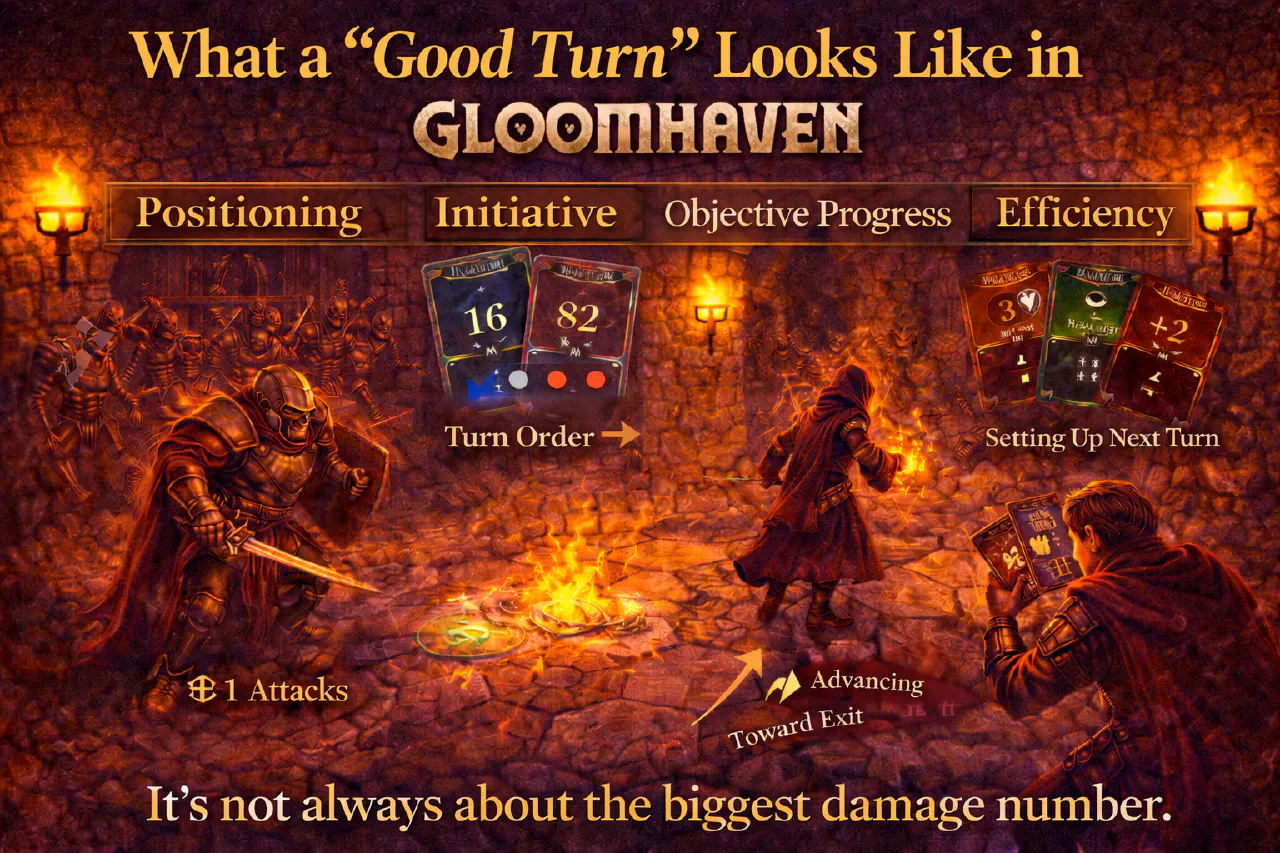
What a Good Turn Looks Like in Gloomhaven
A practical guide to understanding what makes a strong turn in Gloomhaven or Jaws of the Lion, focusing on progress, positioning, initiative, and efficiency rather than just damage.
You’re Not Bad at Gloomhaven — This Is Normal
Why early losses in Gloomhaven and Jaws of the Lion are part of learning the game, what makes the game feel hard at first, and how your decisions actually matter more than luck.
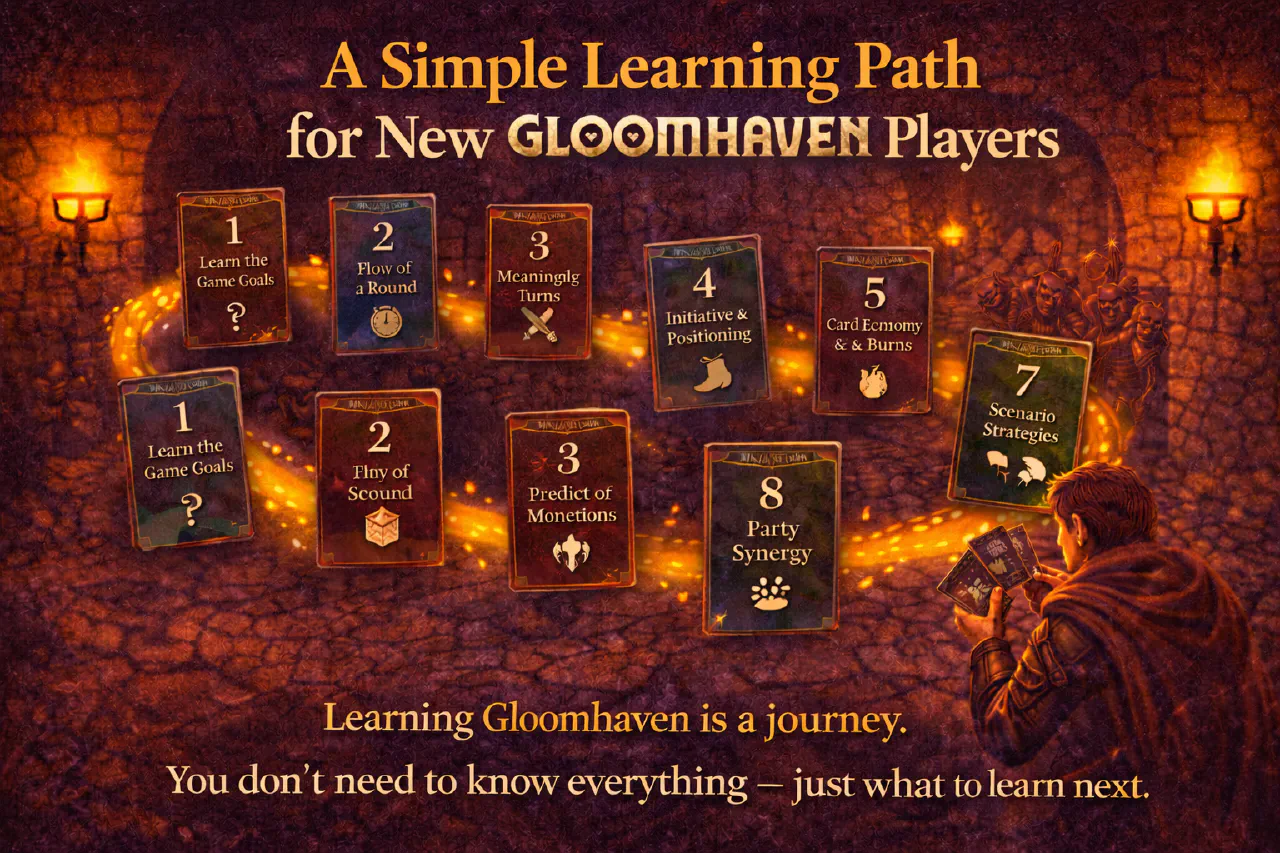
A Simple Learning Path for New Gloomhaven Players
A clear, beginner-friendly learning path for new Gloomhaven and Jaws of the Lion players, showing what to learn first, what to ignore early, and how the game clicks over time.
How Long a Scenario Really Takes (And Why)
Understand how long a Gloomhaven or Jaws of the Lion scenario actually takes, why early scenarios feel slow, and what factors most affect playtime at the table.
How to Choose Your First Character
A beginner-friendly guide to choosing your first character in Gloomhaven or Jaws of the Lion, focusing on playstyle, learning curve, party balance, and common beginner traps.