
On this page
Gloomhaven (and Jaws of the Lion) can feel overwhelming at first — not because any single rule is too complex, but because everything matters at once. New players are often told to “just play and learn,” which is true… but not very helpful when you’re staring at a table full of cards, monsters, tokens, and exceptions.
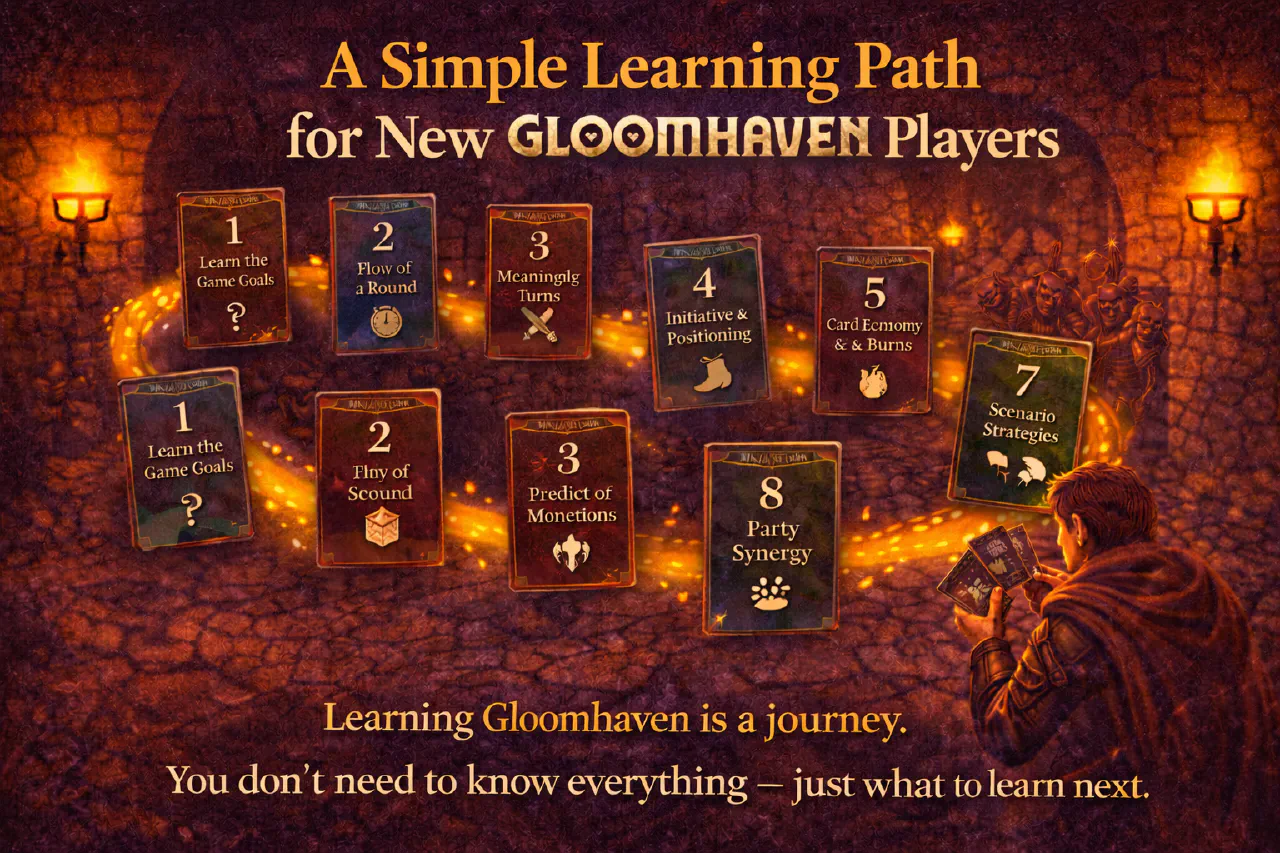
This article lays out a simple, intentional learning path that mirrors how experienced players actually learned the game — just without the confusion and frustration.
You don’t need to master everything at once. You just need to learn the right things in the right order.
Phase 1: Learn What the Game Is Really About
Goal: Stop playing the wrong game.
Before worrying about edge cases or optimal builds, understand this core truth:
Gloomhaven is a resource-management puzzle disguised as a tactical combat game.
Early on, focus on:
- Understanding that your hand of cards is your lifespan
- Accepting that losing scenarios is normal
- Letting go of the idea that killing everything is the goal
At this stage, it’s okay if:
- You forget rules occasionally
- You misplay monster behavior
- Scenarios take much longer than expected
Your job right now is exposure, not mastery.
Phase 2: Understand the Flow of a Round
Goal: Feel comfortable with the rhythm of play.
Once the basic rules make sense, concentrate on how a round actually flows:
- Choose two cards
- Pick initiative
- Monsters reveal their actions
- Everything resolves in initiative order
You don’t need perfect choices yet — just understand:
- Why initiative matters
- How monster actions affect positioning
- How movement and attacks interact
If you can play a round without stopping to re-read the rulebook every step, you’re progressing.
Phase 3: Learn What a “Good Turn” Is
Goal: Stop measuring success by damage alone.
At this point, many new players hit a wall. They’re following the rules but still losing. That’s usually because they’re evaluating turns incorrectly.
Shift your thinking:
- A good turn advances the scenario objective
- A good turn improves future positioning
- A good turn preserves resources for later
Damage is a tool — not the measure of success.
Once you start asking, “Does this move help us win the scenario?” instead of “Can I deal more damage?” the game begins to click.
Phase 4: Initiative and Positioning
Goal: Learn how to avoid damage instead of absorbing it.
This is where many players experience their first major improvement spike.
Focus on:
- Choosing initiative deliberately
- Letting monsters move first when it benefits you
- Using doorways, corners, and obstacles
- Avoiding being surrounded
When initiative and positioning improve, you’ll notice:
- Fewer forced card losses
- Less panic healing
- Fewer “unlucky” turns
This phase turns Gloomhaven from stressful into tactical.
Phase 5: Card Economy and Burning Decisions
Goal: Learn when to spend power and when to conserve.
Now it’s time to understand burning cards:
- Why burning early can be dangerous
- Why burning late can be useless
- When burning is absolutely correct
At this stage, start asking:
- Is this burn changing the outcome of the scenario?
- Is it saving more resources than it costs?
- Am I burning for progress or comfort?
This is where experienced play begins to emerge.
Phase 6: Monster Behavior and Predictability
Goal: Stop reacting and start predicting.
Monsters are not random — they are consistent.
Learn:
- How monsters choose focus
- How movement is determined
- How ability cards shape enemy turns
- Why certain enemies feel dangerous and others don’t
Once you can predict monster behavior even roughly, the game feels dramatically fairer and more controllable.
Phase 7: Scenario Types and Strategic Shifts
Goal: Play the right strategy for the right scenario.
Different scenarios reward different approaches:
- Escape scenarios reward movement and timing
- Defend scenarios reward control and endurance
- Split-party scenarios reward planning and survivability
- Time-limited scenarios reward aggression and efficiency
If you treat every scenario the same way, some will feel impossible. When you adapt your mindset to the scenario type, difficulty evens out.
Phase 8: Party Roles and Synergy
Goal: Make the whole party stronger than its parts.
Finally, start thinking beyond your own character:
- Who opens doors?
- Who blocks choke points?
- Who advances objectives?
- Who delays enemies?
Gloomhaven rewards coordinated play more than individual heroics.
What You Can Safely Ignore Early
To reduce overload, it’s okay to not master these right away:
- Perfect card optimization
- Advanced class builds
- High-level item synergies
- Scenario replay optimization
These matter later. They do not matter now.
How Long This Path Takes
Most groups:
- Struggle for the first 3–5 scenarios
- Start feeling confident around scenario 6–8
- Feel genuinely competent by scenario 10–12
This is normal. You are not behind.
Final Takeaway
Gloomhaven is not meant to be mastered quickly — it’s meant to be learned gradually.
If you follow this learning path:
- You’ll stop feeling overwhelmed
- You’ll understand why you lose
- You’ll improve consistently
- And most importantly — you’ll enjoy the game more
You don’t need to know everything. You just need to know what to learn next.
Next reads
Keep going with spoiler-light, practical guidance.
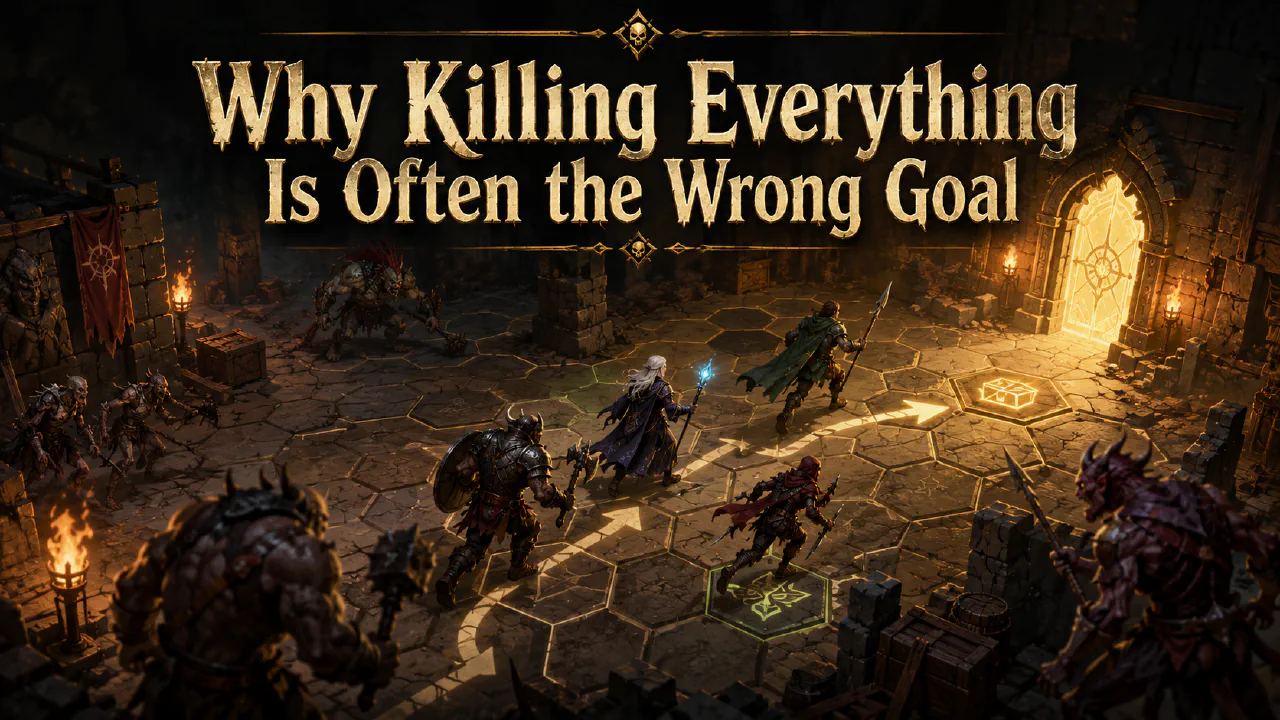
Why Killing Everything Is Often the Wrong Goal
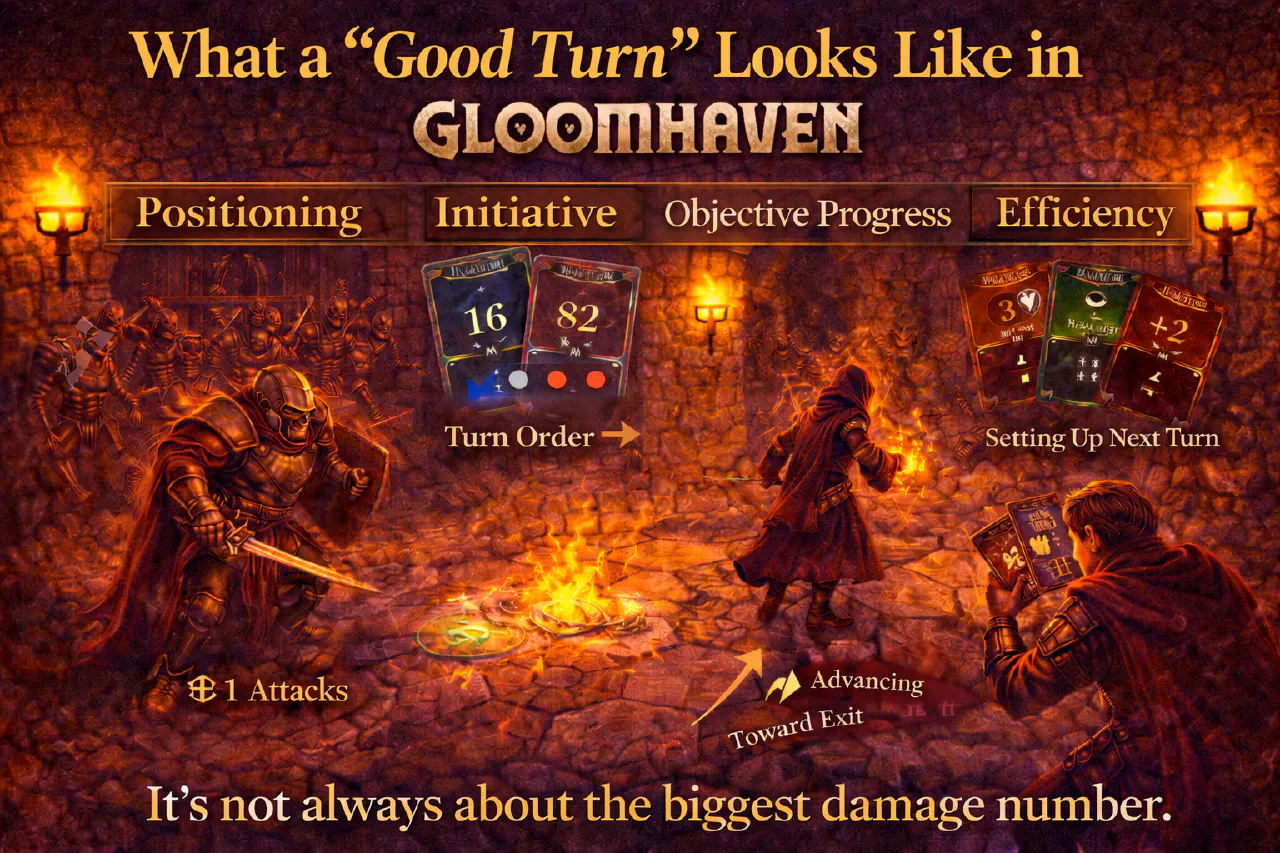
What a Good Turn Looks Like in Gloomhaven
A practical guide to understanding what makes a strong turn in Gloomhaven or Jaws of the Lion, focusing on progress, positioning, initiative, and efficiency rather than just damage.
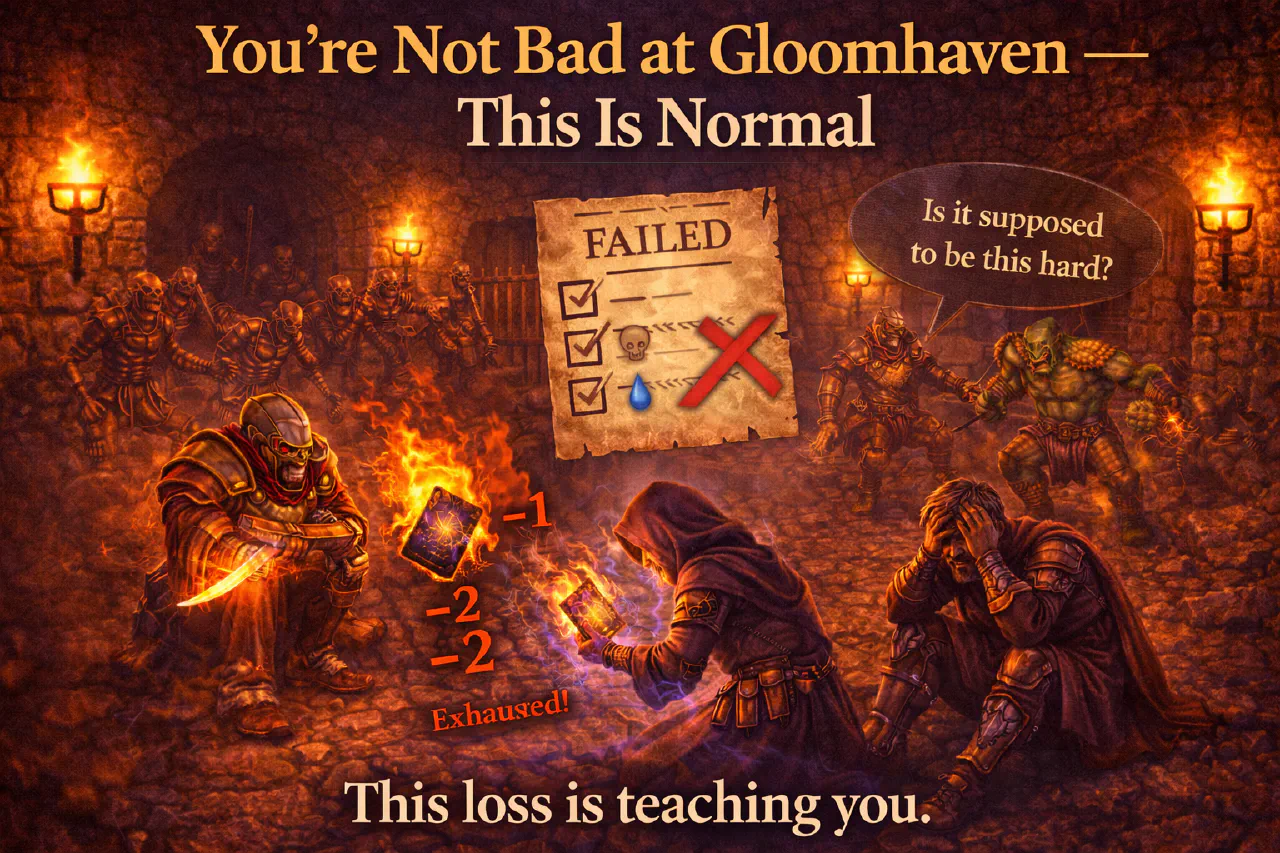
You’re Not Bad at Gloomhaven — This Is Normal
Why early losses in Gloomhaven and Jaws of the Lion are part of learning the game, what makes the game feel hard at first, and how your decisions actually matter more than luck.
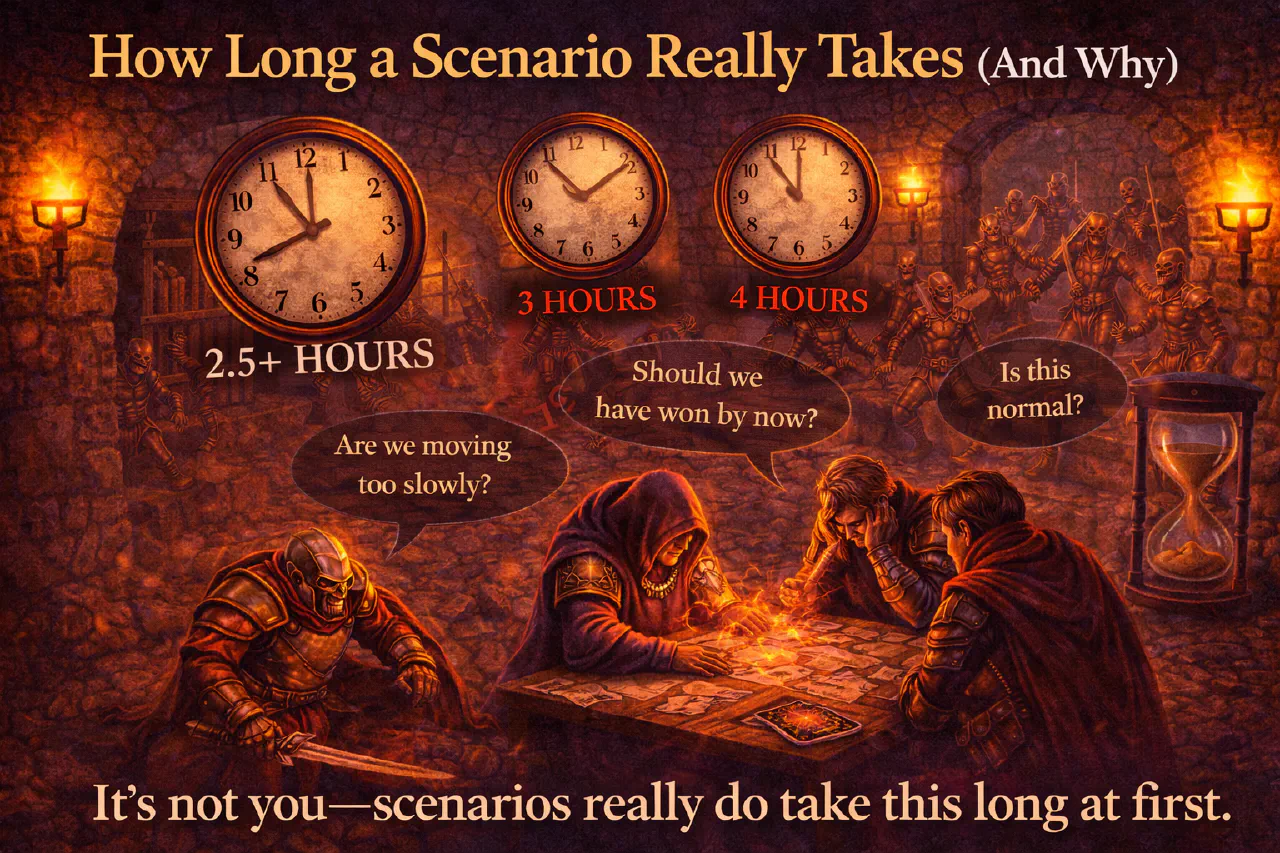
How Long a Scenario Really Takes (And Why)
Understand how long a Gloomhaven or Jaws of the Lion scenario actually takes, why early scenarios feel slow, and what factors most affect playtime at the table.
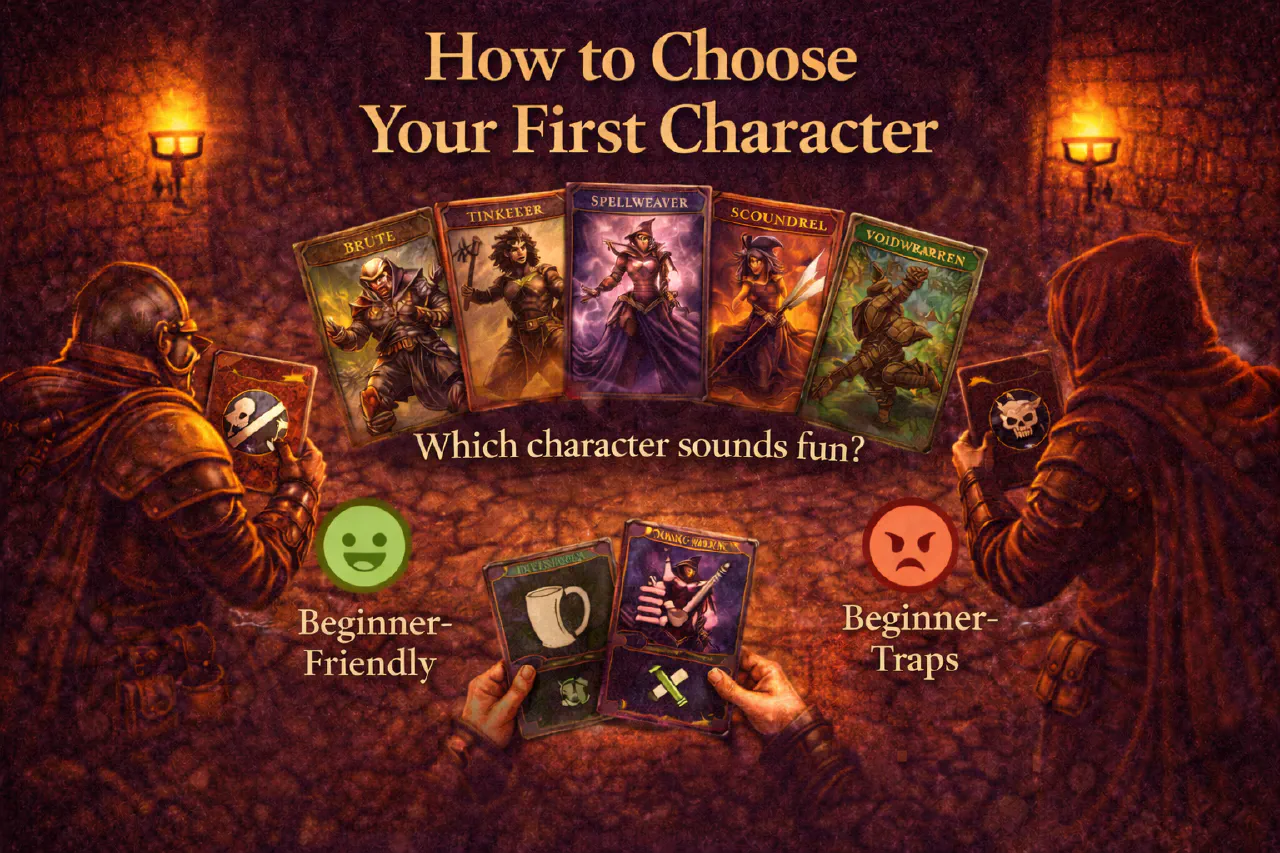
How to Choose Your First Character
A beginner-friendly guide to choosing your first character in Gloomhaven or Jaws of the Lion, focusing on playstyle, learning curve, party balance, and common beginner traps.