
On this page
One of the most common surprises for new Gloomhaven and Jaws of the Lion players is this:
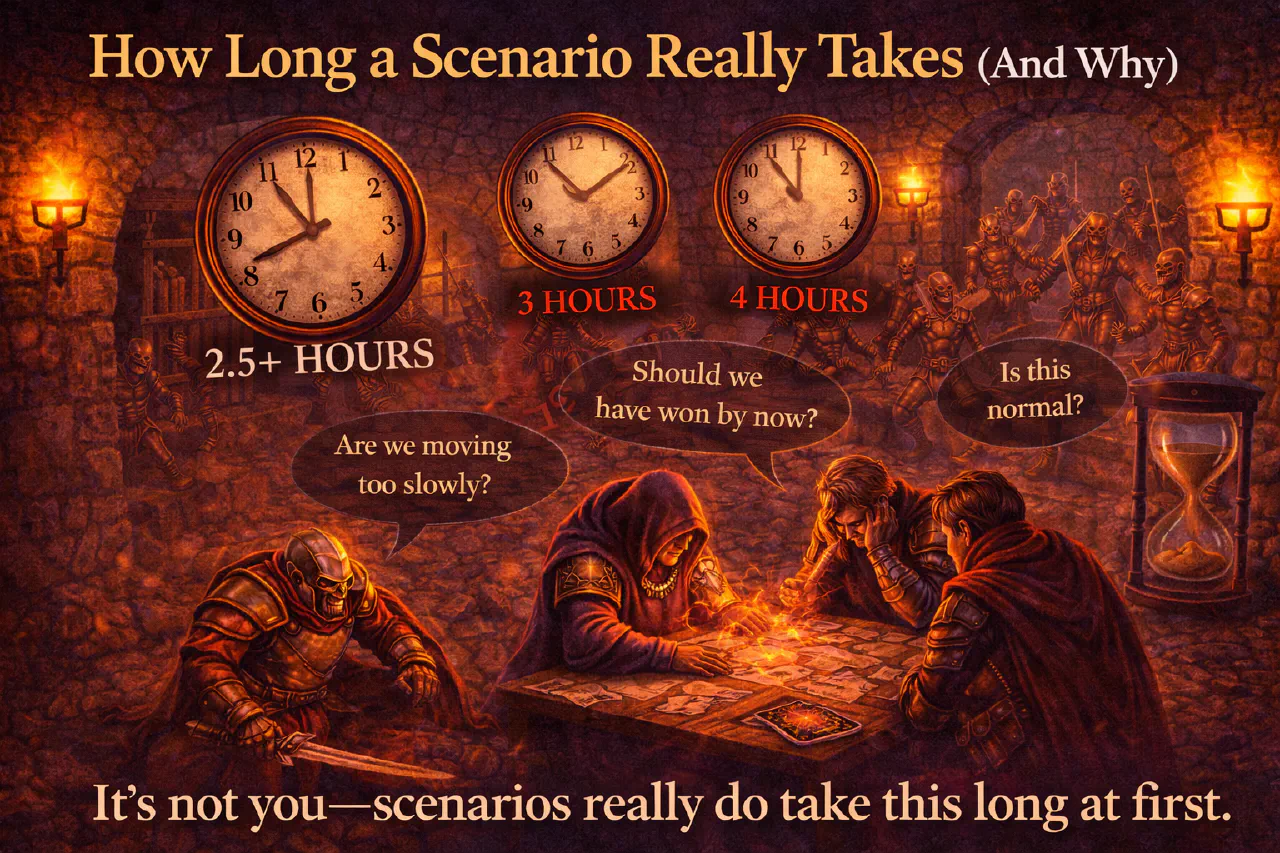
“We thought this scenario would take an hour. It took three.”
If you’ve ever looked at the box, the rulebook, or an online estimate and wondered how anyone finishes a scenario that fast, you’re not alone. Scenario length is one of the most misunderstood parts of the Gloomhaven experience.
This article explains how long scenarios really take, why your early games are slower, and what actually shortens playtime over the course of a campaign.
The Short Answer
For most groups:
- Early scenarios: 2.5–4 hours
- Mid-campaign scenarios: 2–3 hours
- Experienced groups: 1.5–2 hours
If you’re new and taking longer than expected, that’s normal — and expected.
Why Box Times Are Optimistic
The time estimates you see on the box or online assume:
- Familiarity with the rules
- No rules lookups
- Players who already understand initiative, monster focus, and card economy
- Minimal discussion time
New players don’t have any of that yet.
Gloomhaven is not a “learn once, play fast” game. It’s a learn gradually, then speed up game.
The Real Factors That Determine Scenario Length
Scenario length isn’t about difficulty alone. It’s driven by a few consistent factors.
1. Rules Familiarity
Early on, you will regularly pause to ask:
- “Can monsters do that?”
- “When does this element trigger?”
- “Does this count as line of sight?”
- “Can I lose a card to prevent this damage?”
Every pause adds time — but more importantly, it adds mental load. Until the rules feel automatic, scenarios move slowly.
This is not inefficiency. It’s learning.
2. Decision Density Per Turn
In Gloomhaven, every turn involves multiple layered decisions:
- Which two cards to play
- Which halves to use
- Which initiative matters this round
- Where to stand
- How monster actions will resolve
Early players evaluate every option. Experienced players recognize patterns and decide quickly.
The game doesn’t change — your ability to filter choices does.
3. Scenario Structure
Some scenarios are inherently longer:
- Multi-room dungeon crawls
- Scenarios with many monster types
- Scenarios with complex objectives
- Scenarios with spawns or timers
Shorter scenarios usually:
- Have fewer rooms
- Have clearer objectives
- Limit monster variety
Two scenarios of the same difficulty can differ wildly in playtime.
4. Party Size
More players means:
- More turns per round
- More monster scaling
- More discussion and coordination
Typical effects:
- Two players: faster turns, fewer monsters
- Three players: balanced pacing
- Four players: longest scenarios, most discussion
Four-player games are not slower because players are bad — they’re slower because the game gives you more to manage.
5. Analysis and Table Talk
Gloomhaven encourages coordination:
- “If you go early, I can stun that.”
- “If I burn here, can you heal next round?”
- “Let’s wait to open the door.”
This discussion is part of the experience — but it adds time.
As groups gain experience, this talk becomes:
- Shorter
- More targeted
- More intuitive
Why Early Scenarios Feel Especially Long
The first few scenarios feel slow for specific reasons:
- You’re still learning the rules
- You’re learning your character’s deck
- You’re learning how monsters behave
- You’re learning how initiative actually works
- You’re learning how not to play too safely
You’re also more cautious — which often makes scenarios longer and harder than they need to be.
This phase is temporary.
What Actually Makes Scenarios Faster Over Time
Scenarios get faster not because you rush — but because you see fewer decisions as necessary.
Over time, players:
- Recognize bad positioning quickly
- Predict monster movement without checking rules
- Know which cards are traps and which are reliable
- Stop over-healing and over-defending
- Move toward objectives more decisively
Speed comes from confidence, not pressure.
When Long Scenarios Are a Warning Sign
Long scenarios aren’t always bad — but sometimes they signal a problem.
Scenarios may be dragging because:
- You’re killing everything instead of pursuing objectives
- You’re over-prioritizing safety
- You’re over-optimizing to make the “perfect” turn
- You’re burning cards too conservatively
- You’re not advancing rooms efficiently
- You’re reopening discussions every turn
If every scenario takes far longer than expected even after experience, it’s worth reassessing strategy, not speed.
When Long Scenarios Are a Good Sign
Long scenarios can also mean:
- Players are engaged
- Everyone is thinking tactically
- The group is learning together
- Decisions feel meaningful
Especially early in a campaign, long scenarios often mean deep learning is happening.
That pays off later.
Practical Expectations for New Groups
If you’re new, a healthy expectation is:
- First 3–5 scenarios will take much longer than advertised
- You’ll likely lose at least one early scenario
- Rules will feel overwhelming at times
- Things will suddenly “click” after a few sessions
That moment of clarity is real — and worth the investment.
Final Takeaway
If your scenarios are taking longer than expected, you are not doing anything wrong.
Gloomhaven is a game that:
- starts slow
- rewards patience
- accelerates naturally with experience
You don’t need to rush. You don’t need to optimize time. You just need to keep playing.
Speed will come on its own.
Next reads
Keep going with spoiler-light, practical guidance.
Why Killing Everything Is Often the Wrong Goal
What a Good Turn Looks Like in Gloomhaven
A practical guide to understanding what makes a strong turn in Gloomhaven or Jaws of the Lion, focusing on progress, positioning, initiative, and efficiency rather than just damage.
You’re Not Bad at Gloomhaven — This Is Normal
Why early losses in Gloomhaven and Jaws of the Lion are part of learning the game, what makes the game feel hard at first, and how your decisions actually matter more than luck.
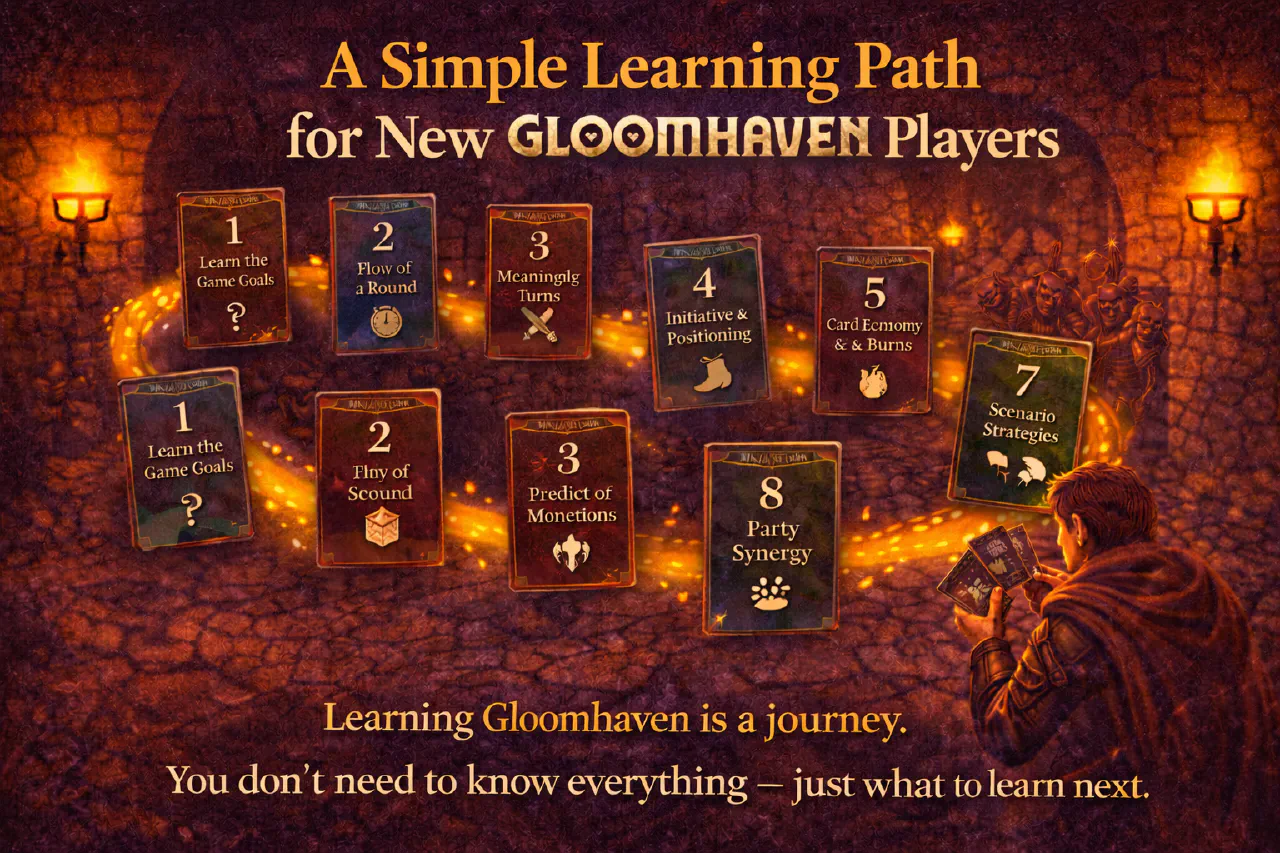
A Simple Learning Path for New Gloomhaven Players
A clear, beginner-friendly learning path for new Gloomhaven and Jaws of the Lion players, showing what to learn first, what to ignore early, and how the game clicks over time.
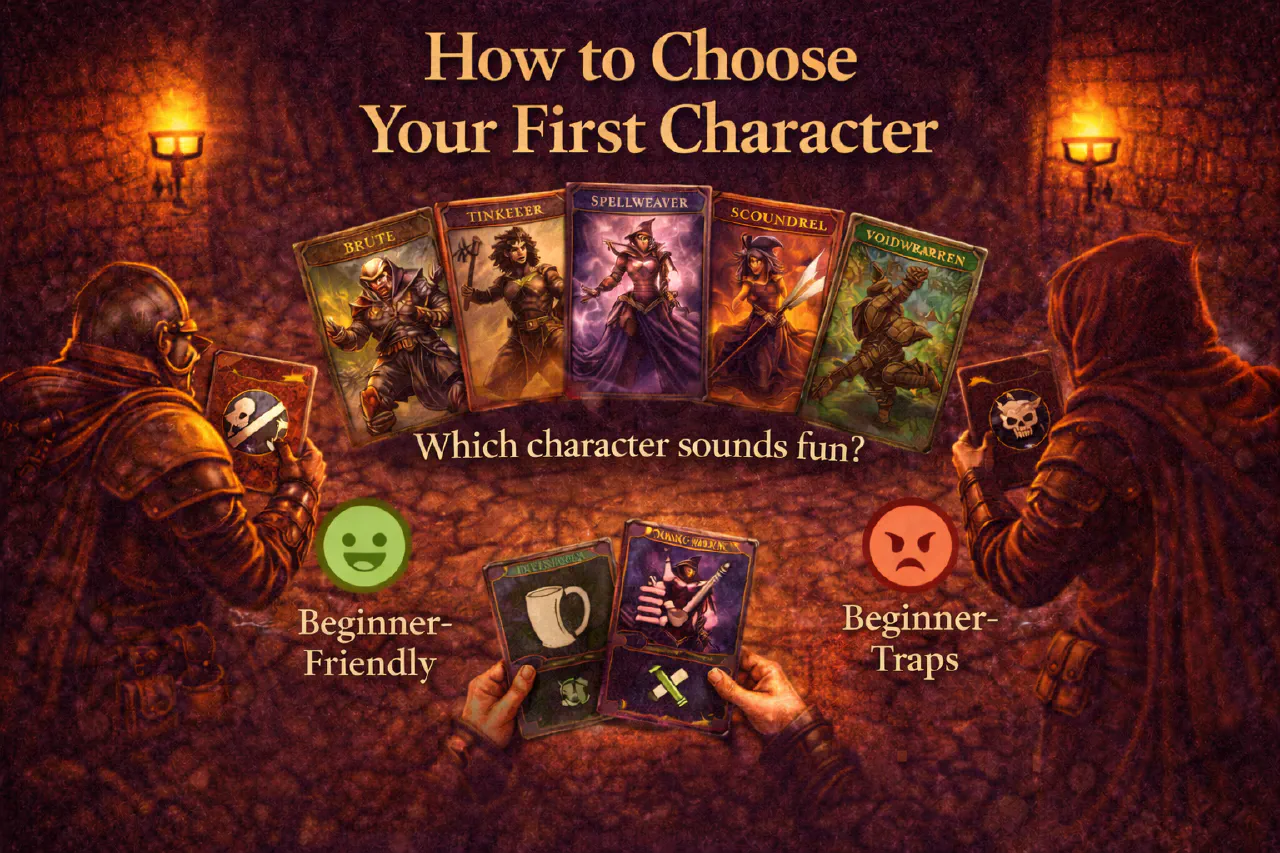
How to Choose Your First Character
A beginner-friendly guide to choosing your first character in Gloomhaven or Jaws of the Lion, focusing on playstyle, learning curve, party balance, and common beginner traps.