
On this page
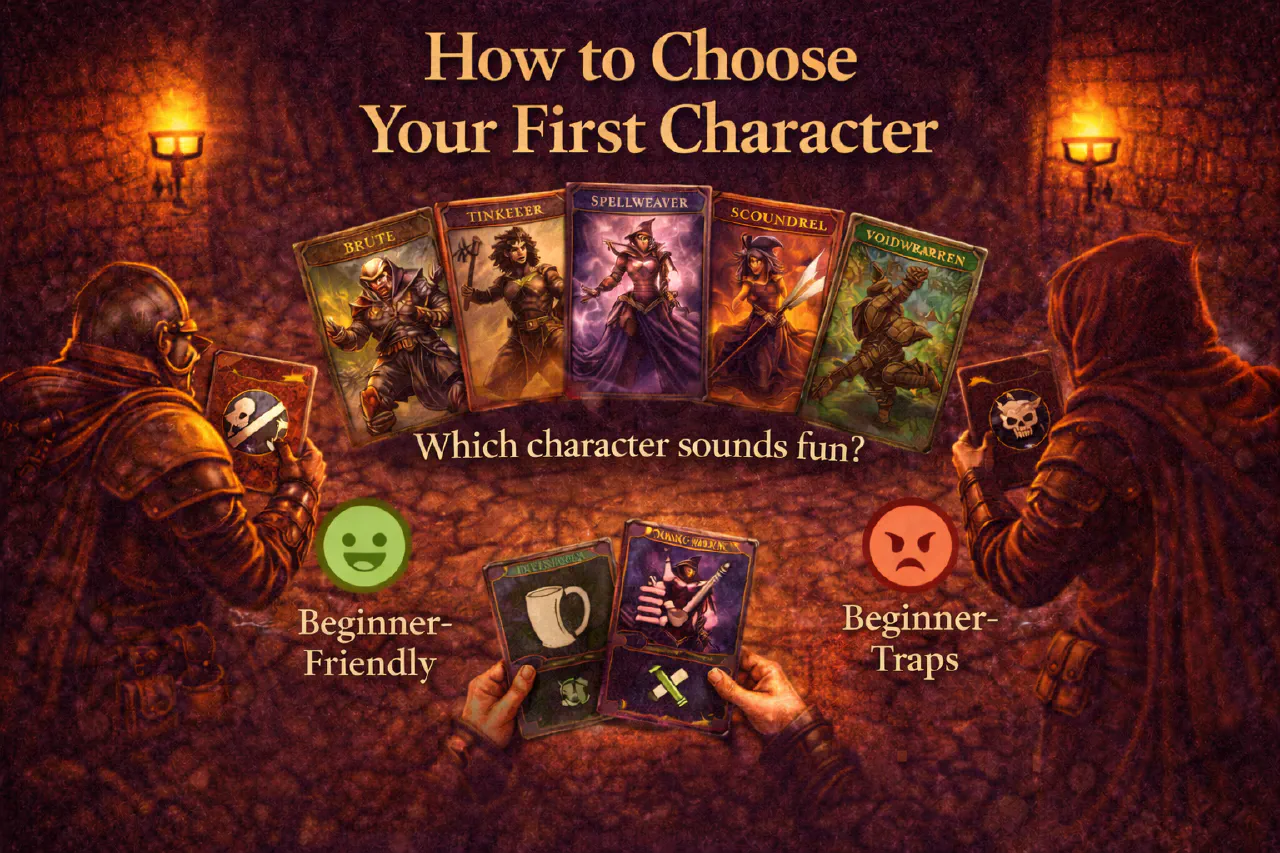
Choosing your first character in Gloomhaven or Jaws of the Lion can feel intimidating. You’re presented with unfamiliar classes, cryptic icons, and vague descriptions — and it’s not obvious which choices are beginner-friendly and which will make the game harder than it needs to be.
The good news: there is no single “correct” first character.
The better news: there are smart ways to choose that reduce frustration, speed up learning, and make your first scenarios far more enjoyable.
This guide walks you through how to choose your first character based on how the game actually plays, not just how the class description sounds.
Start With Playstyle, Not Power
The biggest mistake new players make is choosing a character based on:
- who looks the strongest
- who sounds the most complex
- who they think the party “needs”
Instead, start with a simpler question:
How do you like to solve problems in games?
Your enjoyment will depend far more on playstyle fit than raw effectiveness.
The Four Beginner Playstyle Questions
Ask yourself these honestly:
1. Do You Prefer Direct Action or Planning Ahead?
Some characters reward immediate, obvious decisions:
- Move here
- Hit that enemy
- Block this path
Others reward long-term planning:
- Setting up combos
- Managing resources across many turns
- Accepting short-term pain for long-term gain
If you prefer clear, tactical choices, choose a straightforward class.
If you enjoy planning and delayed payoff, more complex classes can be rewarding — but harder early on.
2. Do You Want to Be in the Middle of the Fight?
Characters tend to fall on a spectrum:
- Frontline fighters who stand between enemies and allies
- Mobile skirmishers who dart in and out
- Ranged characters who influence fights from safety
- Support/control characters who shape the board indirectly
New players often feel more comfortable when:
- they can see their impact immediately
- they aren’t punished heavily for small positioning mistakes
Frontline or mid-range characters are often more forgiving early.
3. How Comfortable Are You With Risk?
Some characters:
- can take hits
- recover from mistakes
- survive bad initiative draws
Others:
- are fragile
- require careful positioning
- punish small errors harshly
If you’re still learning monster behavior and initiative timing, choosing a more resilient character can dramatically reduce frustration.
4. Do You Want Simple Turns or Interesting Turns?
Simple turns:
- are faster to resolve
- have fewer decision branches
- make it easier to learn the game flow
Interesting turns:
- offer many options
- require more thought
- are rewarding once you understand the systems
Neither is better — but starting simpler helps you learn the game before learning your character.
Beginner-Friendly Traits to Look For
When choosing your first character, look for classes that have:
- reasonable health
- consistent movement options
- clear damage or defensive roles
- fewer conditional abilities
- less reliance on perfect timing
These traits forgive mistakes and let you focus on learning core mechanics like initiative, positioning, and objectives.
What to Avoid for Your Very First Character
This doesn’t mean “never play these” — just not as your first experience.
Be cautious with characters that:
- rely heavily on loss cards for effectiveness
- require advanced initiative manipulation
- depend on other players to function
- punish small mistakes with exhaustion
- have complex internal resource systems
These characters shine once you understand the game — but can feel overwhelming at the start.
Party Size Matters
Your choice should also consider how many players you have.
Solo or Two Players
- Self-sufficient characters are easier
- Survivability matters more
- Flexibility beats specialization
Three or Four Players
- Clear roles emerge more naturally
- Fragile characters have more protection
- Support and control become stronger
If you’re unsure, default to characters that can:
- move reliably
- contribute every round
- survive occasional mistakes
Jaws of the Lion vs Gloomhaven Considerations
If you’re starting with Jaws of the Lion:
- Characters are intentionally more beginner-friendly
- Complexity ramps up more gradually
- You’re less likely to make an “incorrect” choice
If you’re starting with Gloomhaven:
- Starting characters vary more in complexity
- Some are much more forgiving than others
- Reading the character overview carefully matters more
Either way, your first character is a learning tool, not a permanent commitment.
You Are Not Locked In Forever
Another important truth:
Your first character is not your last character.
Gloomhaven is built around:
- retirement
- unlocking new classes
- experimenting with different playstyles
Your first character’s job is to:
- teach you the game
- help you enjoy the learning curve
- get you through the early scenarios
You will have plenty of time to explore complexity later.
The Best First Character Is the One You’ll Enjoy Learning
A character you’re excited to play:
- keeps you engaged
- motivates you to learn rules
- makes losses feel like learning, not punishment
If a character sounds fun and fits the beginner-friendly guidance above, it’s probably a good choice.
Final Takeaway
Choosing your first character isn’t about optimization — it’s about reducing friction while you learn.
Pick a character that:
- matches how you like to play
- forgives early mistakes
- helps you focus on the game’s systems
- keeps you engaged through the learning curve
Once the game clicks, you’ll be ready for anything.
Next reads
Keep going with spoiler-light, practical guidance.
Why Killing Everything Is Often the Wrong Goal
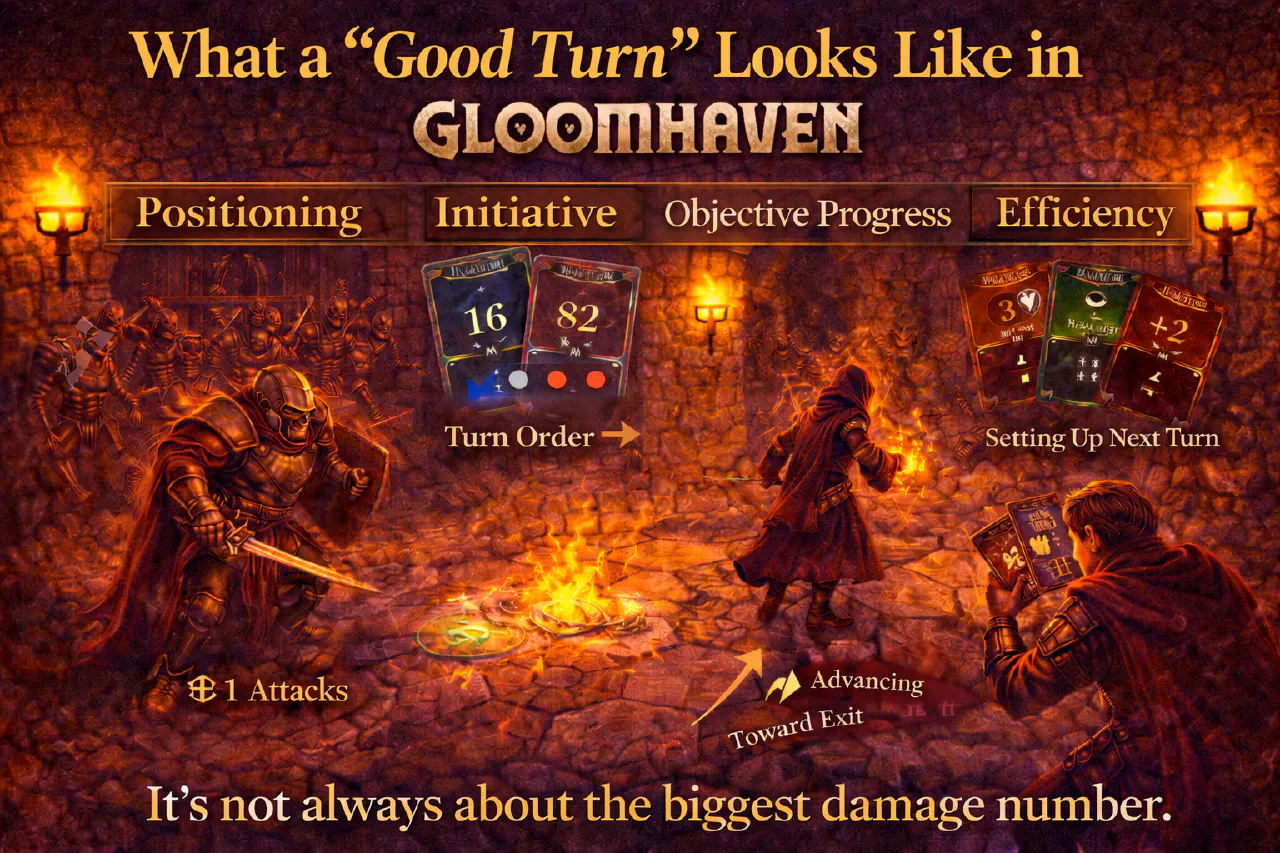
What a Good Turn Looks Like in Gloomhaven
A practical guide to understanding what makes a strong turn in Gloomhaven or Jaws of the Lion, focusing on progress, positioning, initiative, and efficiency rather than just damage.
You’re Not Bad at Gloomhaven — This Is Normal
Why early losses in Gloomhaven and Jaws of the Lion are part of learning the game, what makes the game feel hard at first, and how your decisions actually matter more than luck.
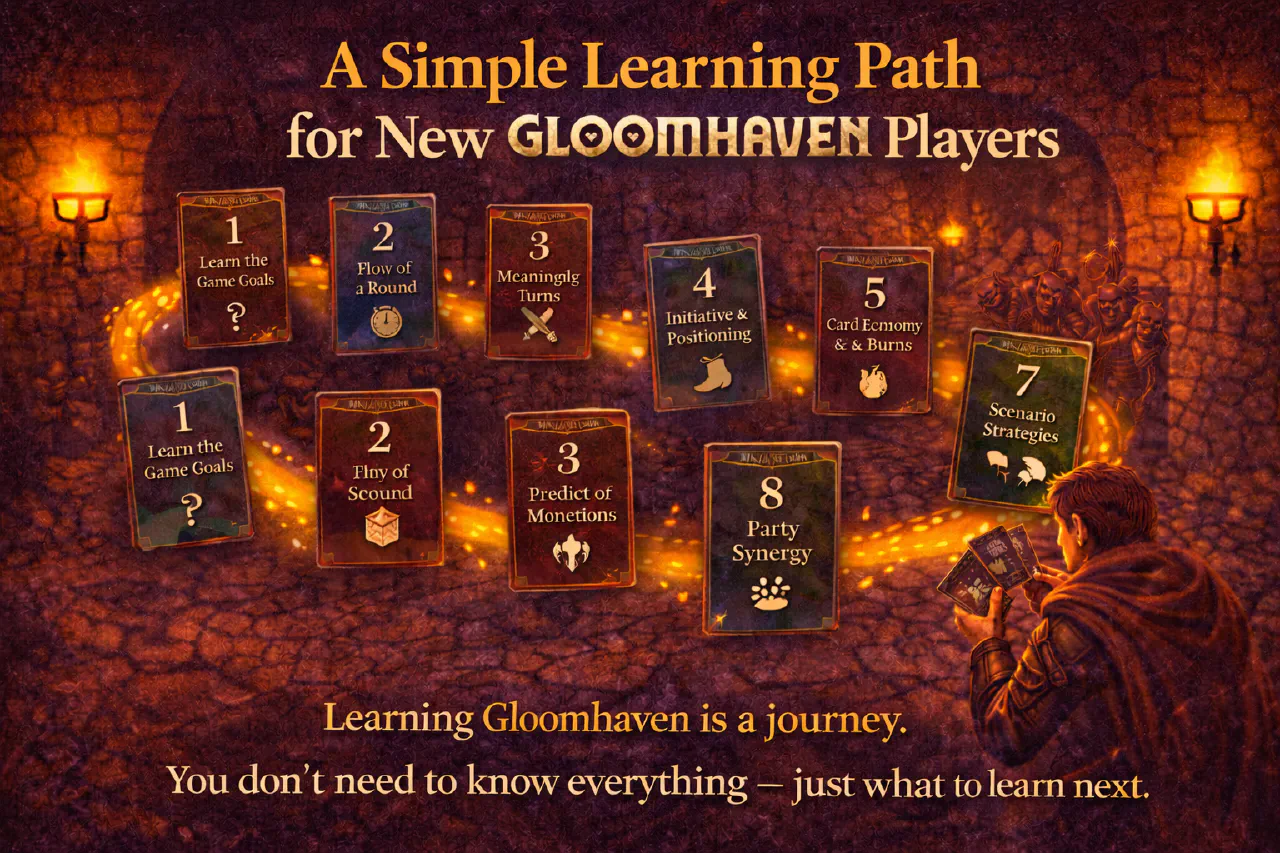
A Simple Learning Path for New Gloomhaven Players
A clear, beginner-friendly learning path for new Gloomhaven and Jaws of the Lion players, showing what to learn first, what to ignore early, and how the game clicks over time.
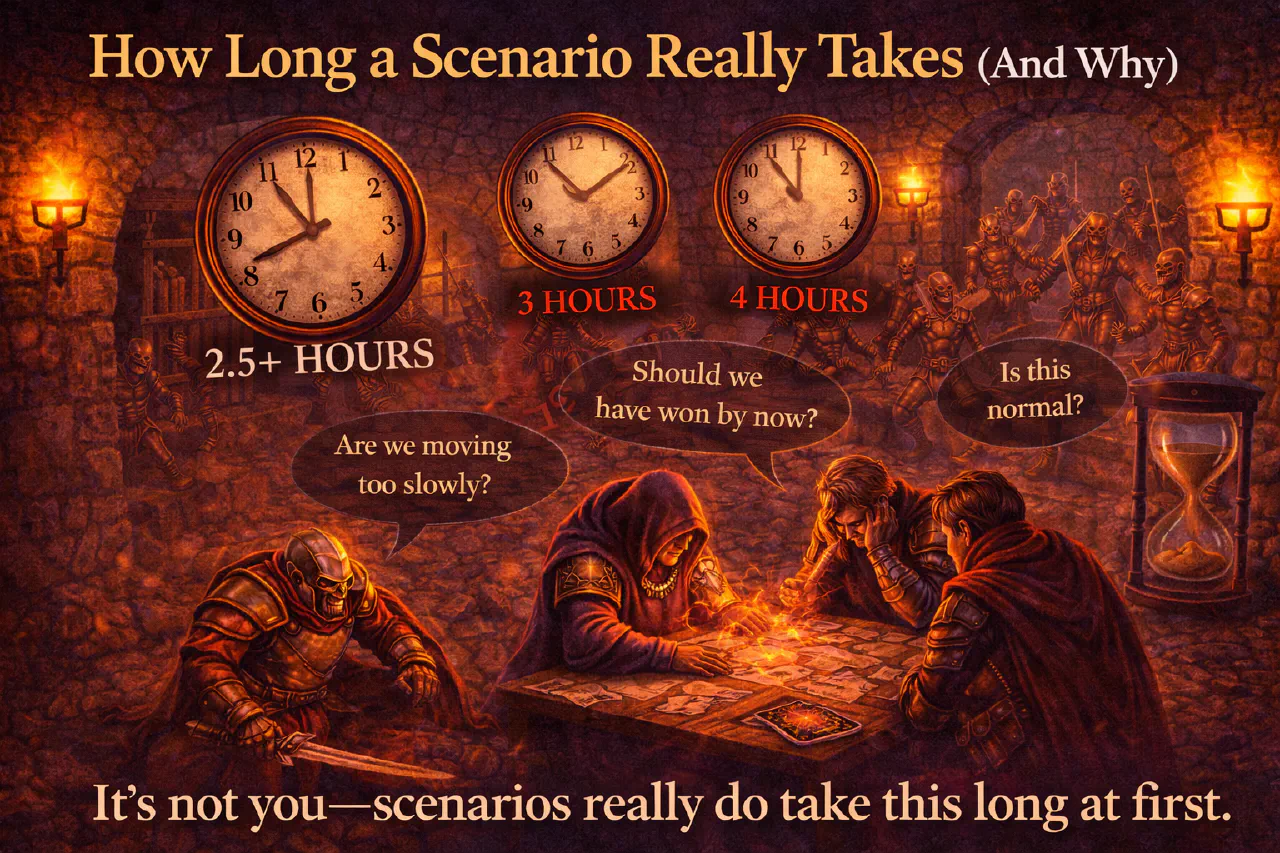
How Long a Scenario Really Takes (And Why)
Understand how long a Gloomhaven or Jaws of the Lion scenario actually takes, why early scenarios feel slow, and what factors most affect playtime at the table.