
On this page
Many new players ask questions like:
- Can I hit the same enemy more than once with a multi-target attack?
- If I have two attacks, can I choose different targets?
- How does range and line of sight work when multiple enemies are involved?
This article explains the rules clearly and gives practical examples so you’re never unsure at the table.
“Multiple Targets” vs “Multiple Attacks" — What’s the Difference?
These two phrases sound like they mean the same thing, but in Gloomhaven they have distinct meanings:
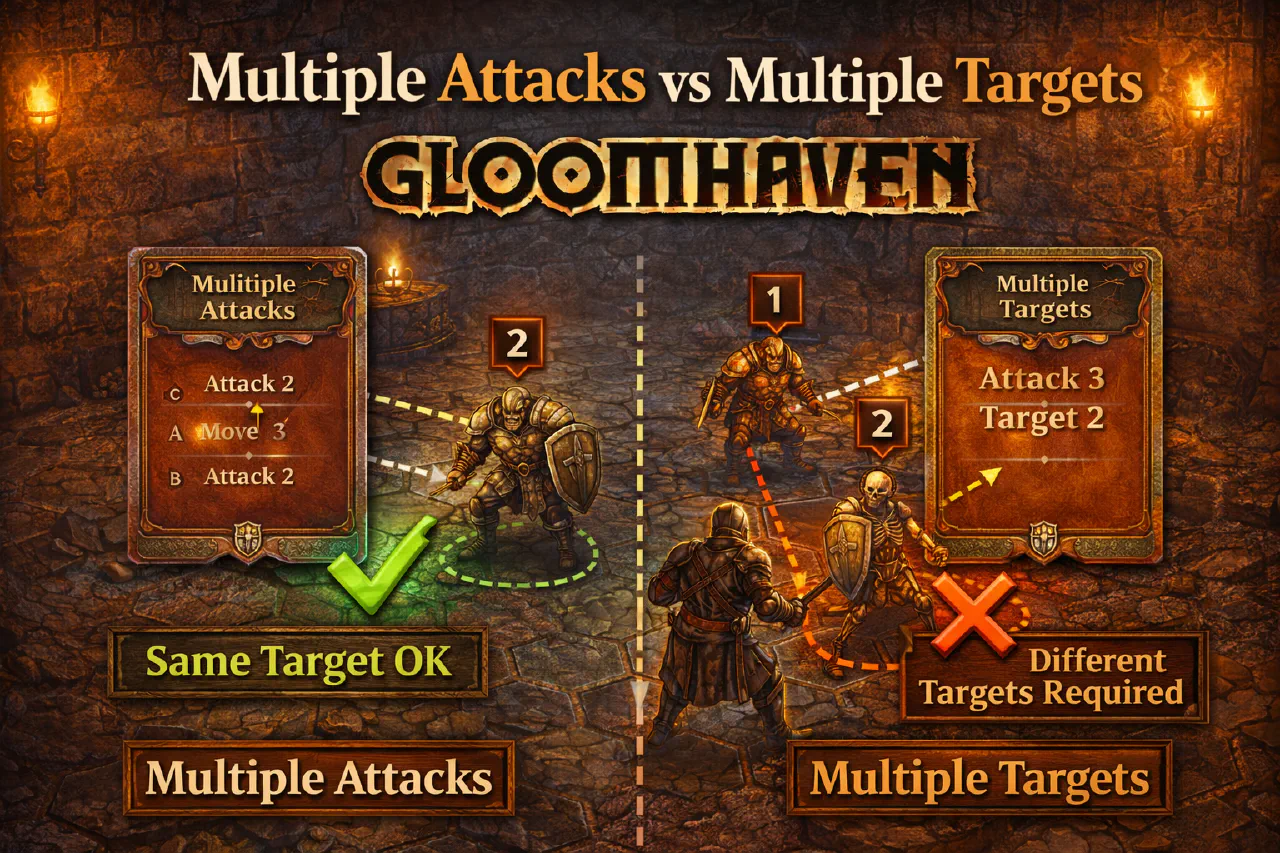
Multiple Targets
Some attacks are written to hit more than one enemy at once — e.g.,
- Target 2
- Target 3
This means the same attack ability can choose multiple eligible targets within range and line of sight. You don’t attack the same enemy twice with this type of attack; each hit must be on a different valid target.
Example
A card says Attack 3, Target 2. If two enemies are within range and line of sight, you:
- pick one for the first hit
- pick a different one for the second hit
You can’t select the same enemy twice for a Target X attack.
Multiple Attacks
Some cards list two or more separate attack actions — such as:
Attack 2, Move 3, Attack 2
These are distinct attack actions on the same turn, and each attack can choose the same or different valid targets based on normal targeting rules. You are not limited to unique targets here.
Example
You have a card that says:
- Attack 2
- then move
- Attack 2
You could:
- attack Enemy A first
- move
- attack Enemy A again or Enemy B on the second hit
Both attacks are considered separate attack actions for targeting purposes.
Why This Rule Exists
The Gloomhaven rules define a Target X attack as one ability that intentionally can hit multiple different enemies in one shot, drawing one attack modifier card for each target.
However, if a card has separate attack actions listed in different parts of its text, those are treated as individual attacks, each separately resolved with its own attack modifier draw.
This distinction matters when you’re planning damage and positioning.
Line of Sight & Range Still Apply
Whether the attack is single target, multi-target, or multiple attacks:
- Line of sight (LOS) is required for every target you choose.
- LOS requires that you could draw a line from any corner of your hex to any corner of the target’s hex without touching a wall, for each target.
For attacks with multiple targets, you check LOS and range individually for each chosen target.
Practical Examples
Example 1: Target 2 Attack
You have a Target 2 attack and there are three enemies in range. You must choose two different enemies to hit. You cannot choose the same one twice because that would violate the multi-target rule.
During resolution, each target gets its own attack modifier card drawn.
Example 2: Two Separate Attacks
Your card has:
- Attack 3
- …
- Attack 2
You may make both attacks against:
- the same target,
- two different targets, or
- any combination allowed by LOS and range.
Each attack is resolved separately with its own attack modifier draw.
Common Pitfalls
Trying to hit the same enemy twice with a Target X attack
Rules explicitly prohibit targeting the same enemy more than once with an attack that targets multiple enemies.
Forgetting LOS for each target
Each potential target must obey standard LOS and range rules — you can’t pick a target that’s blocked behind a wall just because another is in sight.
Summary
-
Multiple targets (Target X) means one attack affects several different enemies, each drawing an attack modifier card. You cannot hit the same target twice in this context.
-
Multiple attacks means you have distinct attack actions that can each target enemies independently — including the same enemy twice.
-
Always check line of sight and range before selecting each target.
Next reads
Keep going with spoiler-light, practical guidance.
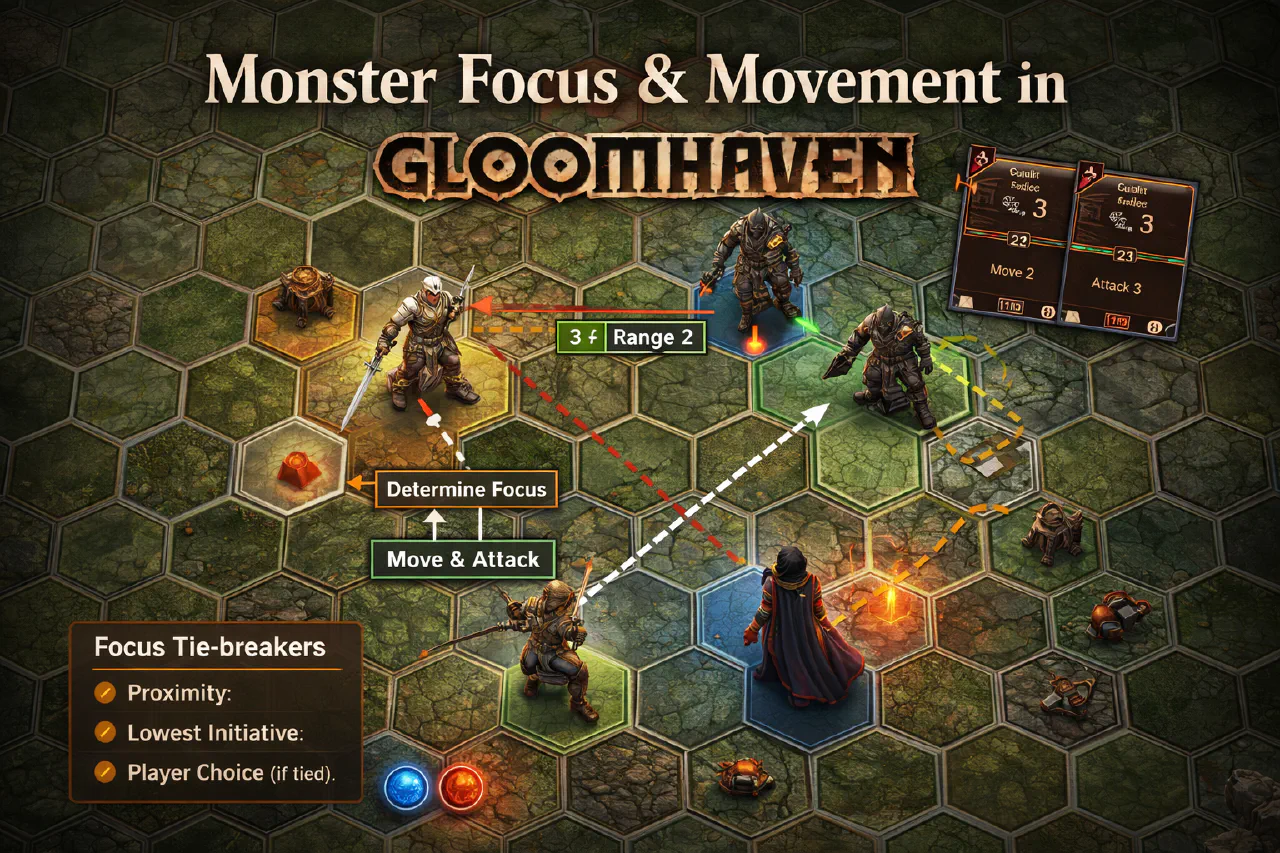
Monster Focus & Movement in Gloomhaven (Beginner Flowchart + Examples)
Learn exactly how monsters choose focus, where they move, and when they stop. Spoiler-free, rules-accurate, with a simple flowchart and common edge cases.
How Monster Ability Cards Work (Why Enemies Feel Swingy)
A clear, beginner-friendly explanation of Gloomhaven monster ability cards: what they do, how they determine monster actions, and why enemy behavior sometimes feels unpredictable.
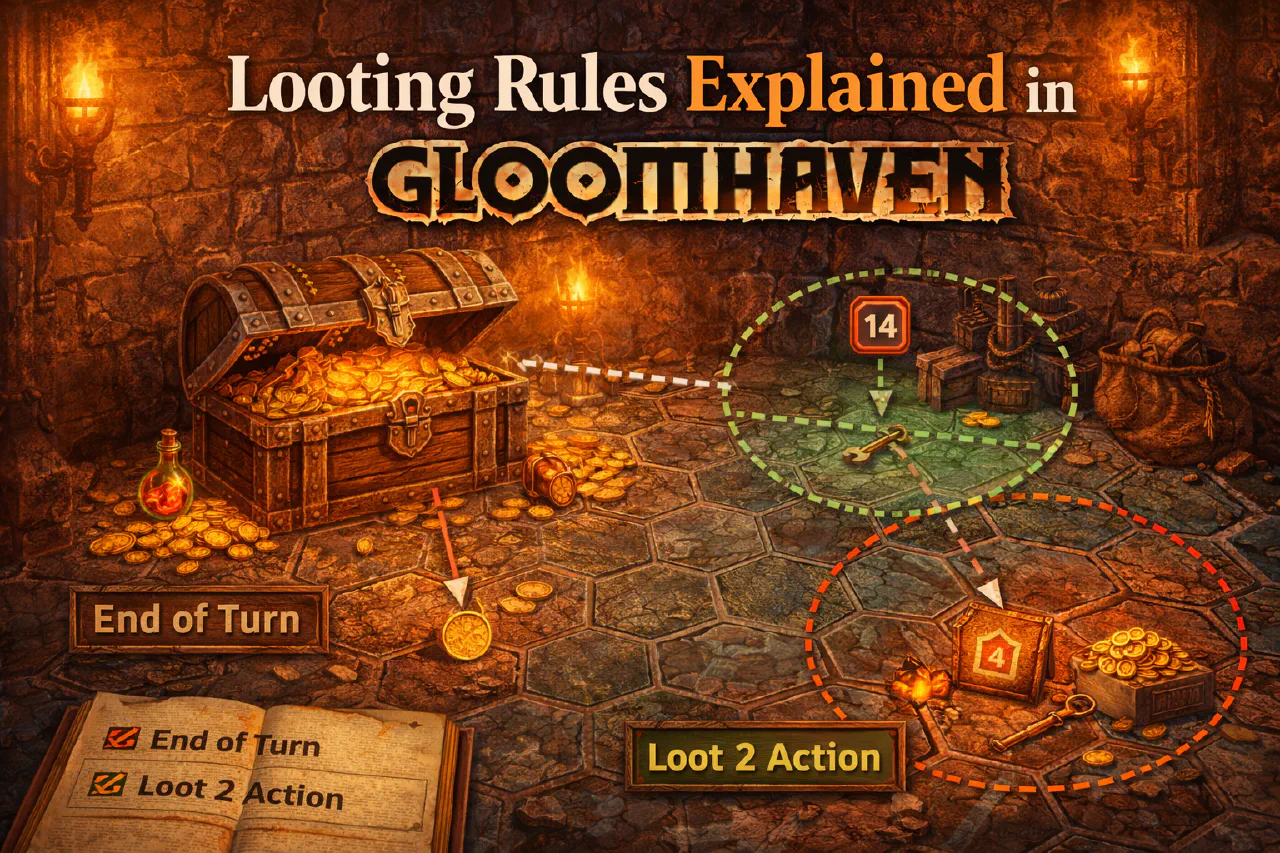
Looting Rules Explained in Gloomhaven — Timing, Range, and Greed
A clear, spoiler-free guide to how looting works in Gloomhaven: how you pick up coins and treasure tiles, when looting happens, how range works, and practical tips to make sure you don’t miss out.
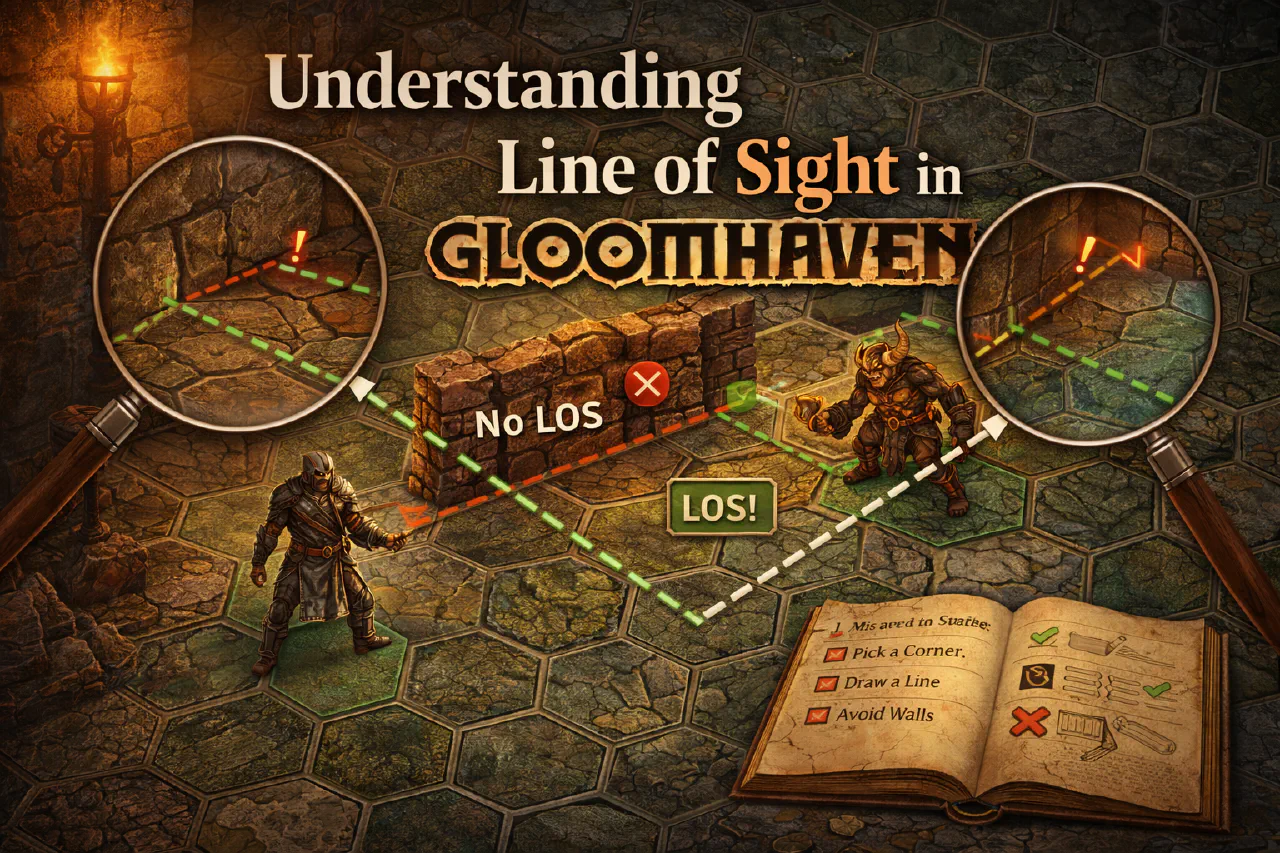
Gloomhaven Line of Sight: Walls, Corners and Jaws of the Lion Rules
Check line of sight in Gloomhaven and Jaws of the Lion with hex diagrams, game-specific targeting rules, and clear examples of what blocks an attack.
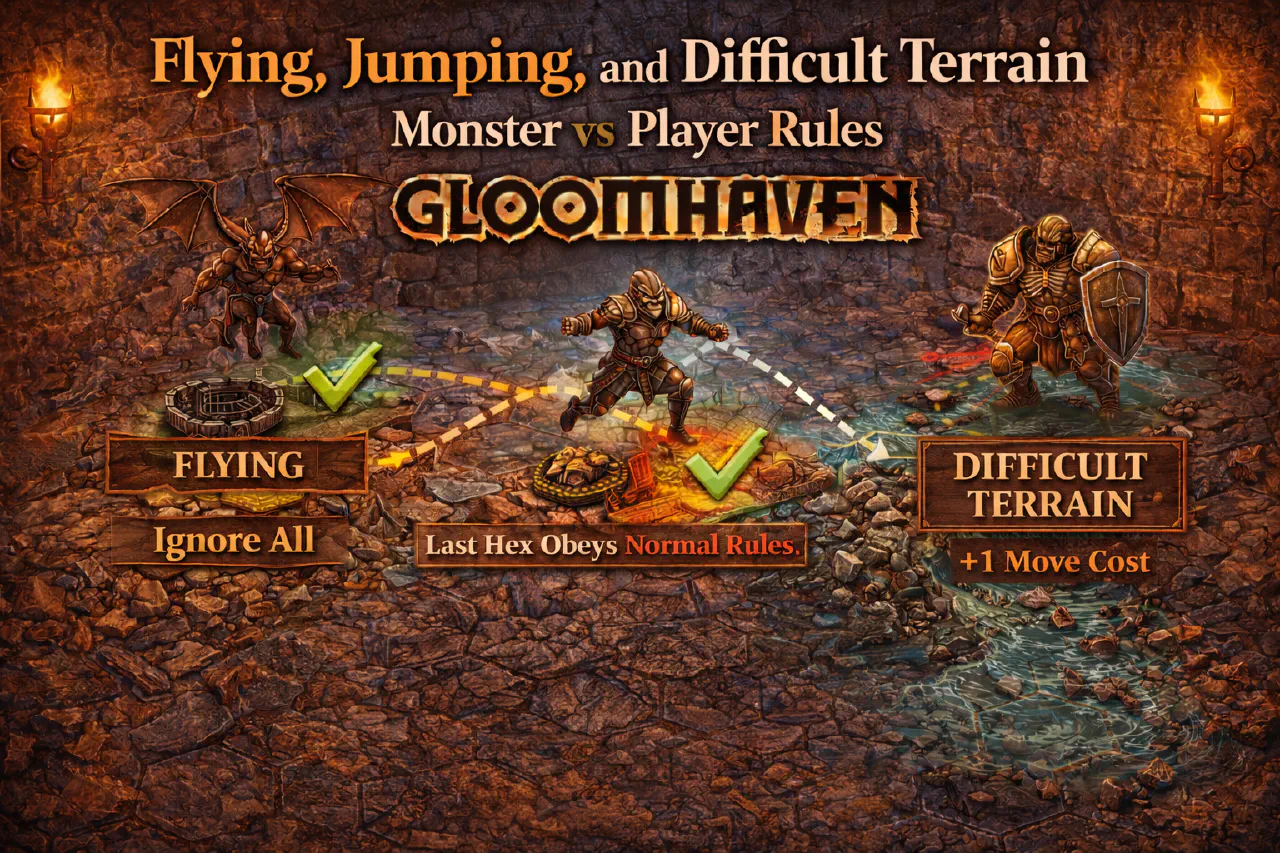
Gloomhaven Jump vs Flying: Difficult Terrain, Traps and Movement
Learn how Jump, Flying, difficult terrain, and traps interact in Gloomhaven, including the different jump landing cost in Jaws of the Lion.
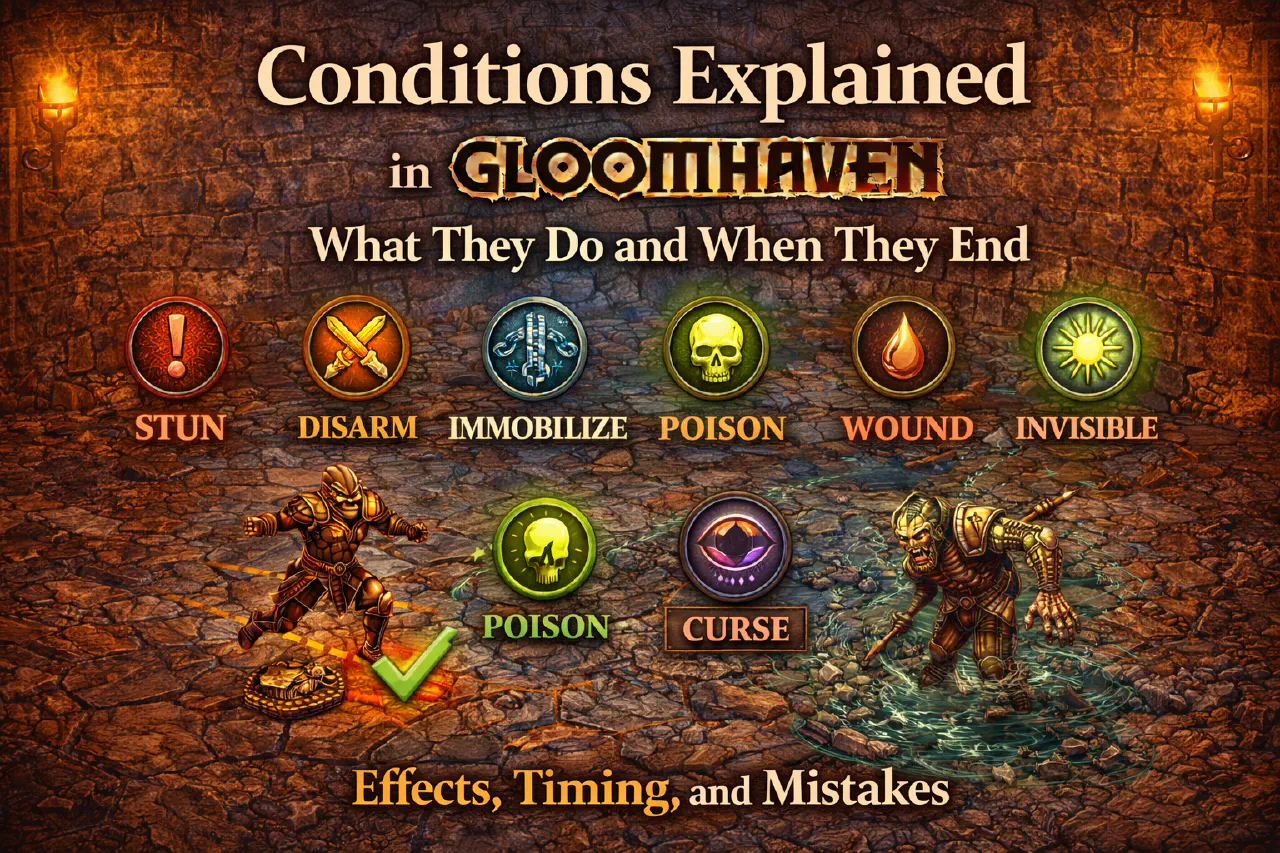
Conditions Explained in Gloomhaven (What They Do and When They End)
A clear, beginner-friendly guide to all conditions in Gloomhaven: what each condition does, when it applies, when it is removed, and common rules mistakes.