
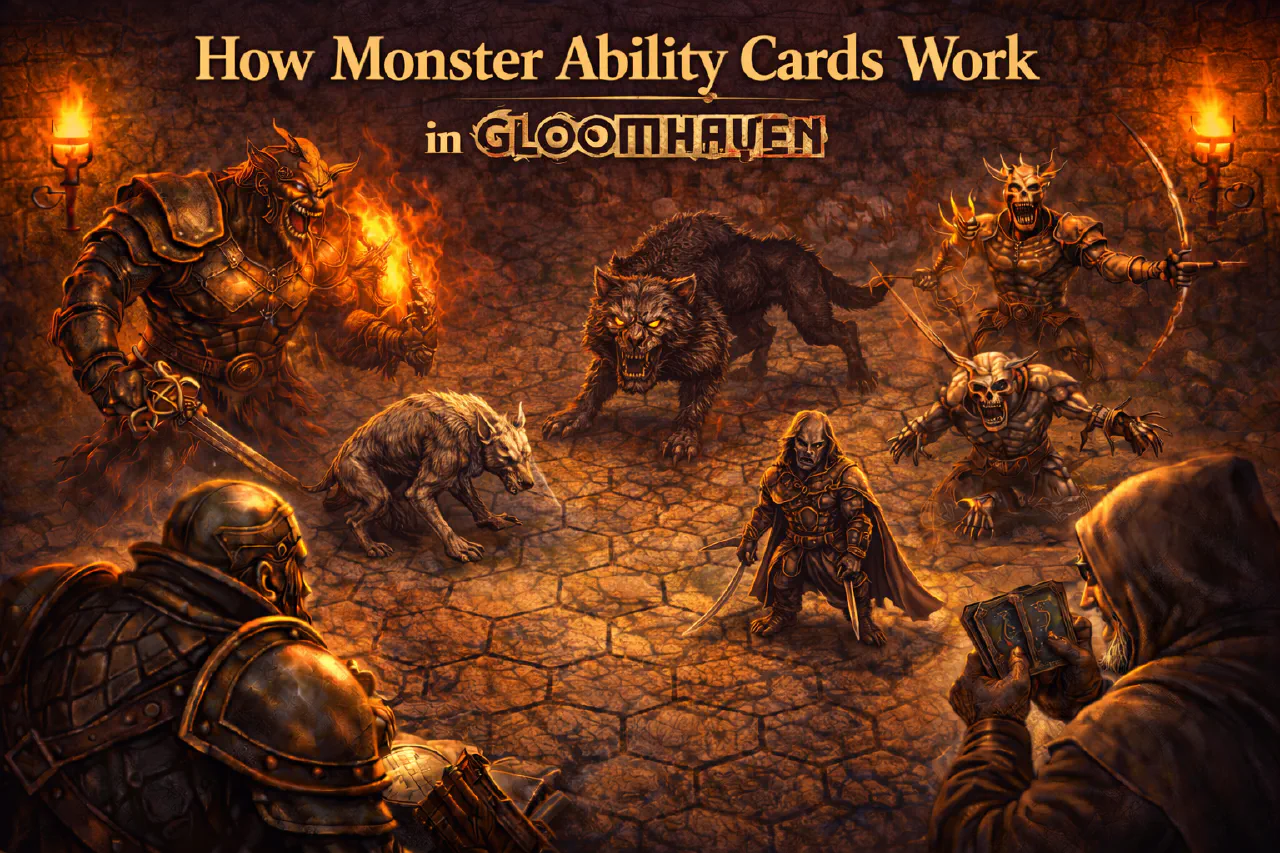
On this page
One of the biggest questions new players ask is:
“Why do monsters sometimes act in ways that feel random or unpredictable?”
The short answer is: *monster ability cards aren’t random — they’re deterministic, but they mix movement, attacks, targeting, and initiative in ways that feel variable. Understanding how they work explains the “swingy” feel and makes enemy turns easier to plan around.
What Monster Ability Cards Are
In Gloomhaven, each type of monster has its own ability deck. Each round, after players have chosen and revealed their cards, the game:
- Draws one ability card per monster type with figures on the map.
- That card determines what all monsters of that type do this turn.
- The card also has an initiative value that determines when that monster type acts relative to players and other monsters.
- Monsters then act in initiative order based on that card.
That’s it — there’s no rolling dice or individual monster decision-making.
What’s on a Monster Ability Card
A monster ability card typically includes:
- Movement (e.g., “Move +2”)
- Attack (e.g., “Attack +3”)
- Range/Target info for attacks
- Modifiers such as Pierce, Shield, or negative effects
- Initiative value (for turn order)
Depending on the monster and its type, a card might have move only, attack only, move + attack, or special actions.
Example
A card might say:
Move 3 Attack 2 Target 1 Initiative 45
This means the monster will attempt to move up to 3 hexes toward its target and then perform an attack with strength 2 against one target — but only if all conditions (range/LOS) are met.
Initiative and Turn Order
Each round, players and monsters reveal their cards, and the game builds a turn order based on initiative values:
- Lowest initiative number acts first
- Highest acts last
- Players choose initiatives in the same timing as monsters are revealed
- Monsters of the same type all act on the same initiative
- If two monster types tie, players decide which goes first
- If a player and a monster tie, the player goes first
This setup is a big reason monsters feel unpredictable: you don’t know whether they’ll act before or after you until initiative is revealed, which can drastically change your plans.
How Monsters Use Their Ability Cards
Once initiative is determined, each monster resolves the entire ability card drawn for that type.
Monsters follow this process:
- Focus on a target — figure out who they intend to threaten or attack (see monster focus rules).
- Move toward that target if the card has movement.
- Attack if the target is in range and line of sight.
- Apply effects (Pierce, Shield, conditions, etc.) exactly as written.
If the card has no movement, the monster won’t move. If it has no attack symbol, it won’t attack.
This strict adherence to the card’s instructions makes monsters consistent, not “intelligent” — and sometimes that looks unpredictable when cards vary widely.
Why Monsters Feel “Swingy”
A big part of the swinginess players feel comes from:
1. Mixed Actions
Monster cards often combine movement and attack in unpredictable mixes (e.g., move 4 but attack only at range 3). This makes outcomes vary by board position.
2. Initiative Variance
Some monster cards have fast initiative, some slow. Drawing a slow attack card can leave players open, while a fast attack can disrupt plans.
3. Targeting Logic
Monsters pick a focus based on path movement and attack ranges. Sometimes they move a lot without attacking, other times they hit hard unexpectedly.
All of this stems from the fact that each card represents a possible behavior pattern — and the deck shuffles these patterns, so every round feels different even though the rules for each card are deterministic.
Acting as a Group vs Individuals
When a monster type’s ability card is revealed:
- Every monster of that type performs the same ability in initiative order.
- Within a type:
- Elites act first
- Then normal monsters in ascending standee number order
This means a room full of the same enemy can feel coordinated, but if the card has a surprising ability on it, that surprise happens across all of them at the same initiative — which feels more intense than individual dice rolls.
Examples of Ability Cards
Different cards can lead to very different monster turns:
Card A: Attack-heavy
Attack +4 Target 2 Initiative 30
This monster will try to hit two targets hard — and act before most players.
Card B: Movement-only
Move +3 Initiative 55
This monster prioritizes closing distance — so next turn will be more dangerous.
Card C: Defensive
Shield +2 Self Move +0 Initiative 10
This monster prioritizes self-defense this round, often surprising players who expect attacks.
The exact mix of these cards in the deck and the initiative values dictate how threatening monsters feel.
How to Plan Around Monster Cards
You can use the mechanics of monster ability cards to your advantage:
- Track what’s been played — you know which cards remain and can predict what might come up.
- Position intentionally — because monsters follow strict movement rules, you can bait them or avoid clustering.
- Adjust your initiative — sometimes going slow lets monsters move into a better position for you next turn.
Understanding that monsters don’t choose actions — they follow a card — changes combat from chaotic to predictable chaos with practice.
Why This System Exists
Gloomhaven intentionally uses ability cards for monsters because:
- It creates a predictable but varied set of behaviors
- It lets players learn patterns and plan
- Initiative becomes a part of the tactical puzzle
- Players can anticipate and adapt instead of relying on random dice
This makes every round feel fresh while still allowing smart play to control outcomes.
Next reads
Keep going with spoiler-light, practical guidance.
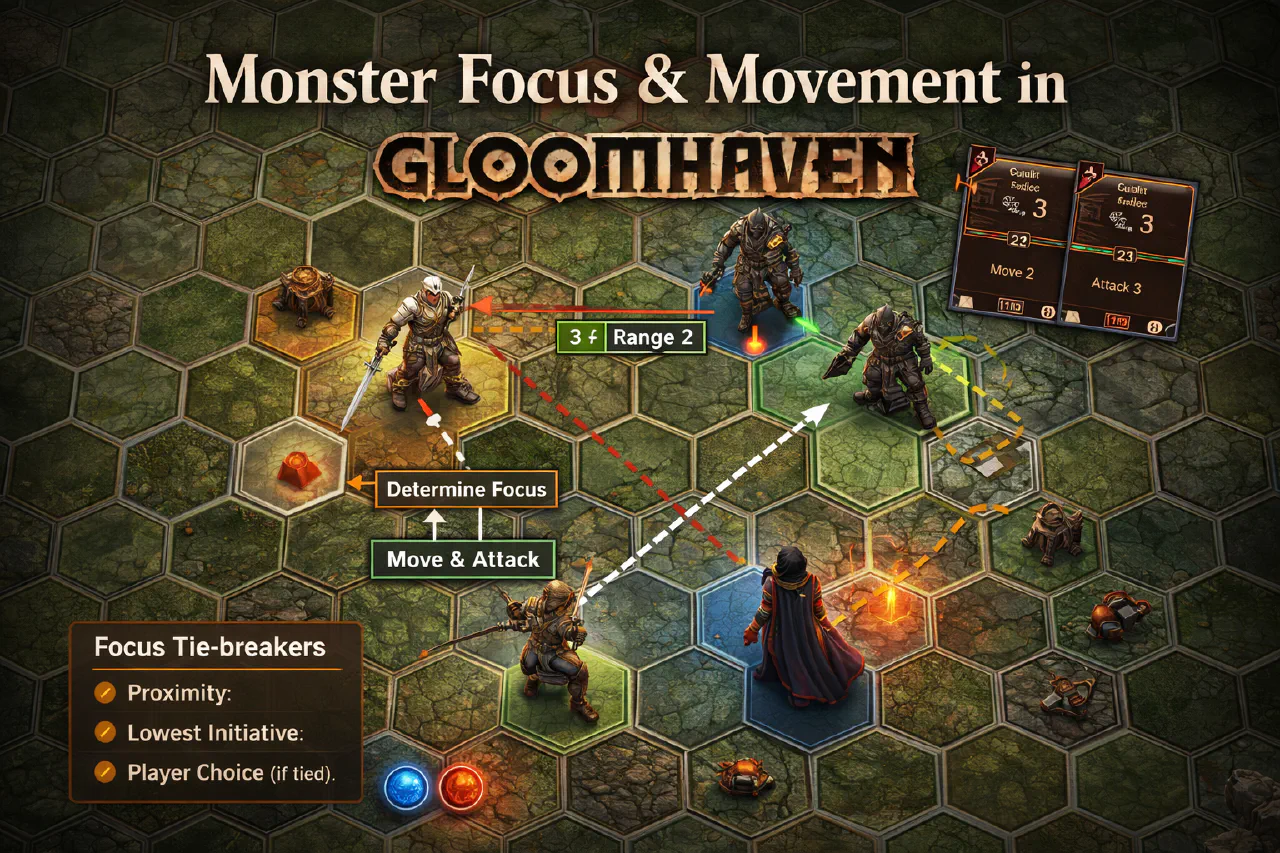
Monster Focus & Movement in Gloomhaven (Beginner Flowchart + Examples)
Learn exactly how monsters choose focus, where they move, and when they stop. Spoiler-free, rules-accurate, with a simple flowchart and common edge cases.
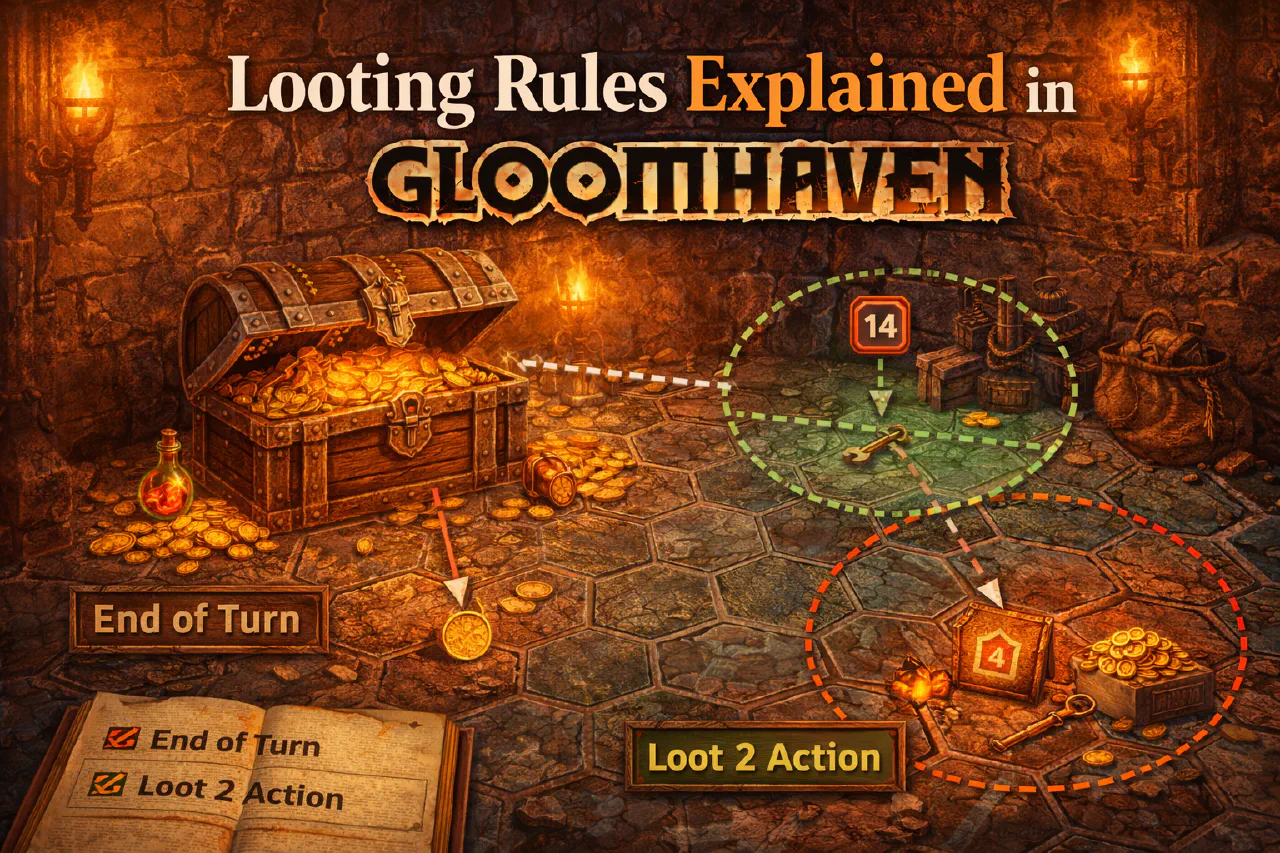
Looting Rules Explained in Gloomhaven — Timing, Range, and Greed
A clear, spoiler-free guide to how looting works in Gloomhaven: how you pick up coins and treasure tiles, when looting happens, how range works, and practical tips to make sure you don’t miss out.
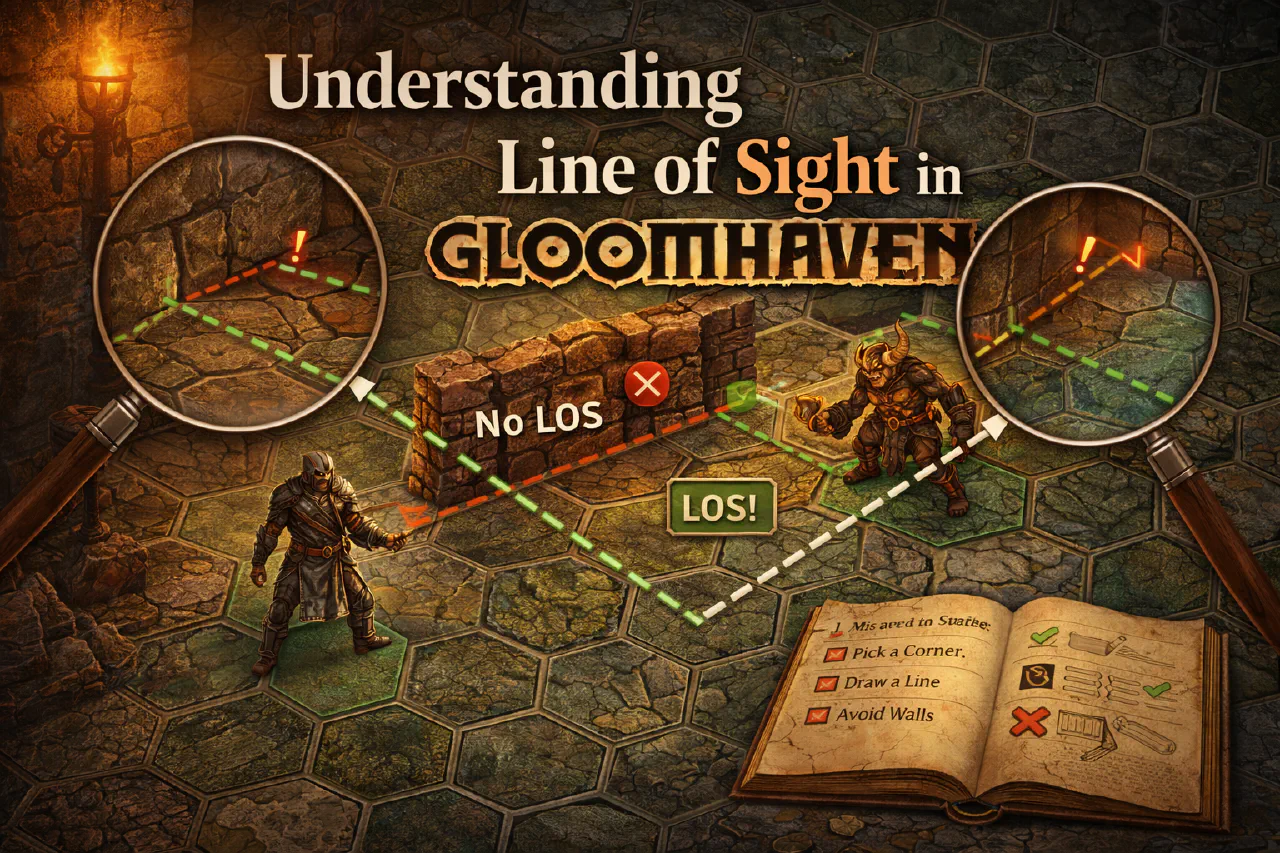
Gloomhaven Line of Sight: Walls, Corners and Jaws of the Lion Rules
Check line of sight in Gloomhaven and Jaws of the Lion with hex diagrams, game-specific targeting rules, and clear examples of what blocks an attack.
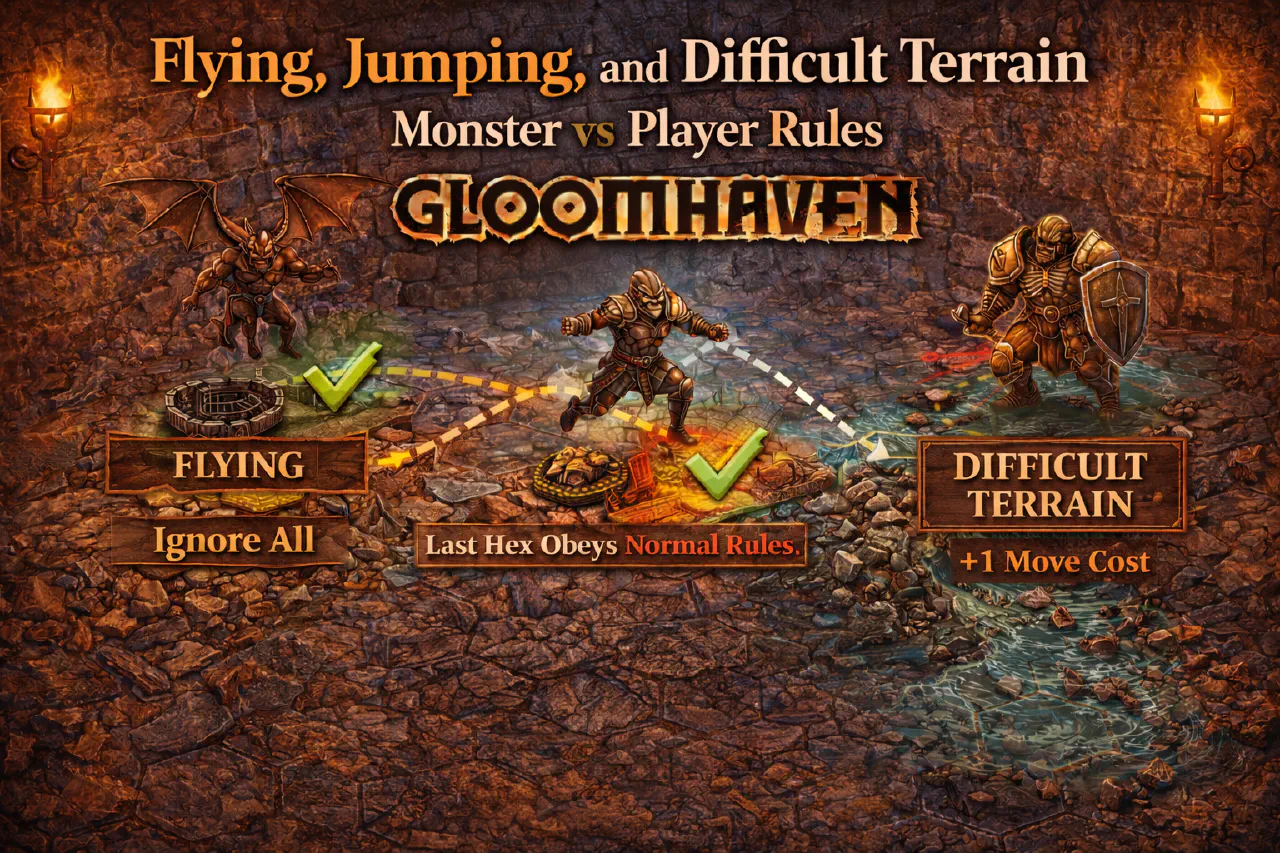
Gloomhaven Jump vs Flying: Difficult Terrain, Traps and Movement
Learn how Jump, Flying, difficult terrain, and traps interact in Gloomhaven, including the different jump landing cost in Jaws of the Lion.
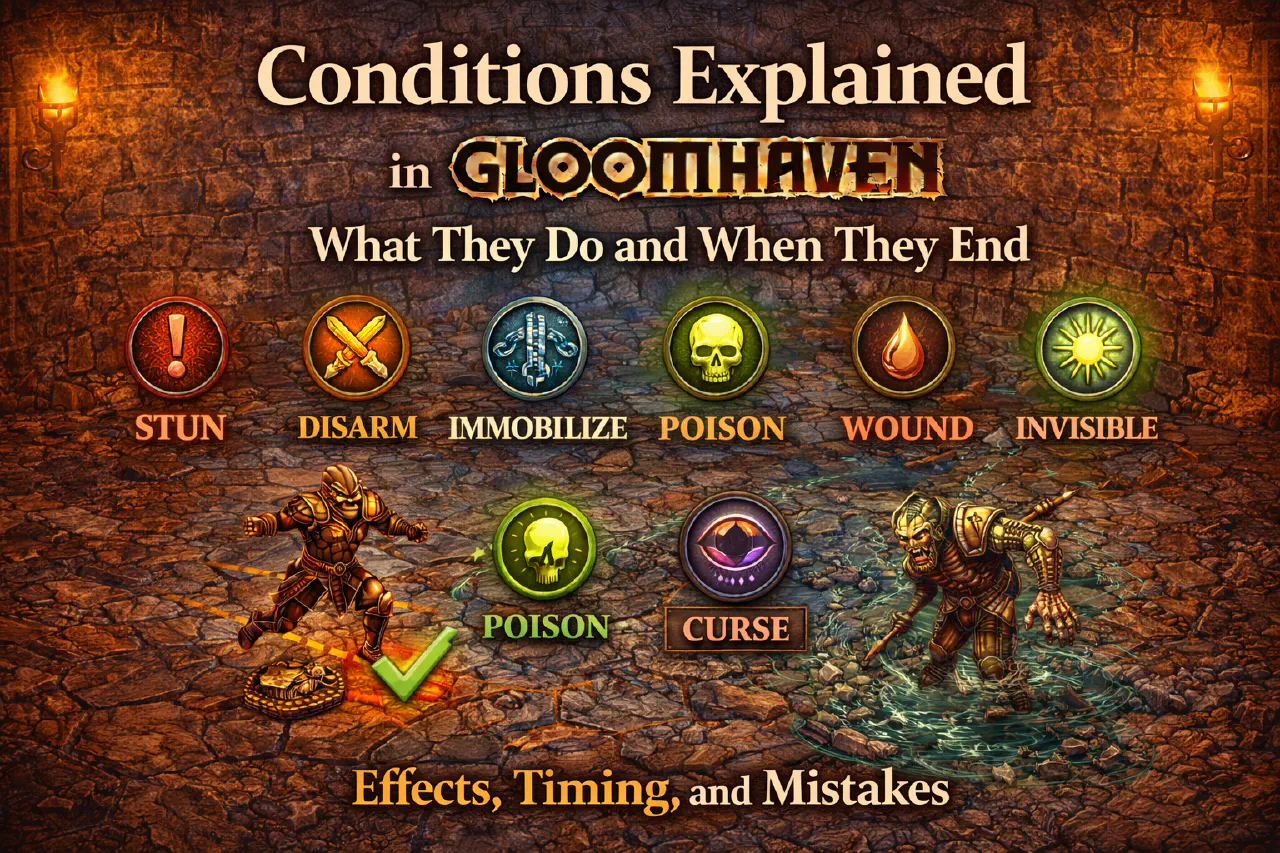
Conditions Explained in Gloomhaven (What They Do and When They End)
A clear, beginner-friendly guide to all conditions in Gloomhaven: what each condition does, when it applies, when it is removed, and common rules mistakes.