
On this page
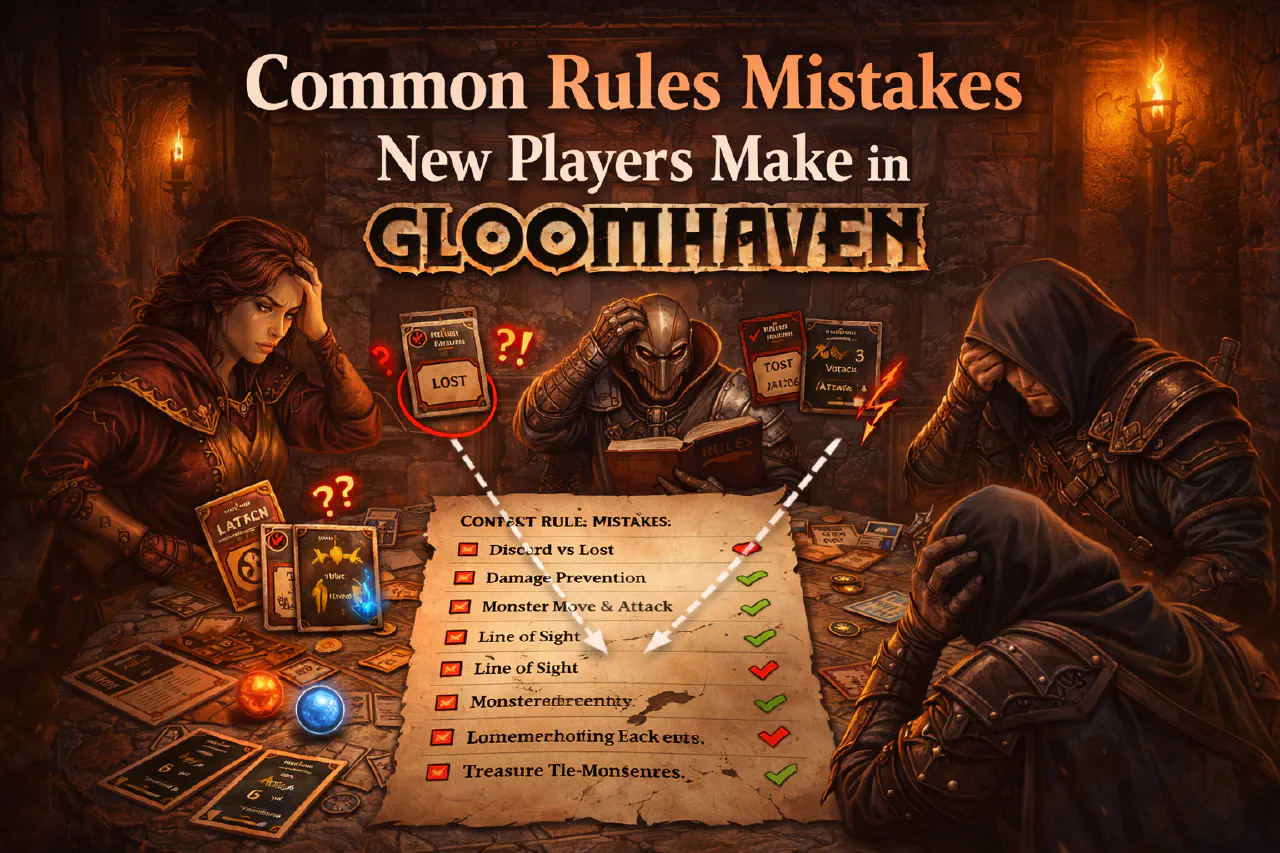
Gloomhaven is deep, tactical, and incredibly rewarding—but it also has a lot of rules that are easy to misinterpret or forget, especially for new players. Even groups that read the rulebook carefully often discover they’ve been playing something slightly off for a few scenarios before a “wait… that’s not right” moment happens.
Here’s a spoiler-free rundown of the most common rules mistakes new players make—and what the rules actually say.
1. Confusing Discard vs Lost Cards
Many beginners think that all cards you play are gone until you rest—but that’s not true.
- Cards you play go to your discard pile (and can be recovered on a long or short rest).
- Cards designated as Lost (marked with the “burn” icon) are gone for the scenario.
- Default actions (Attack 2/Move 2) still count as playing that card.
2. Misusing Damage Prevention
New players often misunderstand how damage avoidance works:
You can lose one card from hand or two cards from your discard to avoid one instance of damage from any source. This includes damage from monsters, traps, etc.
3. Thinking Monsters Always Move & Attack
Monsters act based on what is actually on their ability card:
- If the monster’s card includes Move, it moves.
- If it includes Attack, it attacks.
- If it includes both, it does both (first move then attack, or vice-versa, depending on card text).
4. Not Applying Line of Sight Correctly
Line of sight affects whether an attack can be made, not how monsters pick focus (the target they try to reach and attack).
- Players often assume monsters need line of sight before selecting a focus.
- Actually, focus is determined by the shortest path to any hex where the monster could attack, including line of sight from that hex, not at the monster’s starting position.
5. Forgetting Advantage/Disadvantage Rules
Advantage and disadvantage in Gloomhaven apply to the attack modifier deck, and people often misinterpret how they interact with non-modifier cards like bless/curse cards.
6. Not Using Default Actions When Useful
Each card you select gives you two possible halves:
- You may use one top action and one bottom action
- If either half isn’t helpful, you can replace it with a default action
- Default top: Attack 2
- Default bottom: Move 2
7. Miscalculating Scenario Level
Especially when using rulebooks or apps, players sometimes forget how scenario levels are calculated:
- Scenario level is generally the average level of the party / 2, rounded up.
- Difficulty modifiers (Easy/Normal/Hard) can adjust that further.
8. Overlooking How Traps Work
Traps aren’t always just hit-point damage:
- Some traps impose statuses (stun, poison, wound) instead of or in addition to damage.
- Not all traps on the board do damage—some just apply a negative effect.
9. Misunderstanding Loot & Rewards Timing
Many groups forget that:
- Loot tokens aren’t awarded until after scenario completion.
- Treasure gained during a scenario is separate from scenario goals.
Tips to Avoid Mistakes
Here are quick habits to adopt:
- Read a rule twice before you start — subtle wording matters.
- Use a bookmark/callout cheat sheet during your first few games.
- Don’t assume mechanics work like other board games — Gloomhaven has its own logic.
Final Thought
Everybody makes these mistakes—even experienced groups! The key is to notice them, correct them, and then use them to your advantage. With a bit of practice, these rules become second-nature.
Next reads
Keep going with spoiler-light, practical guidance.
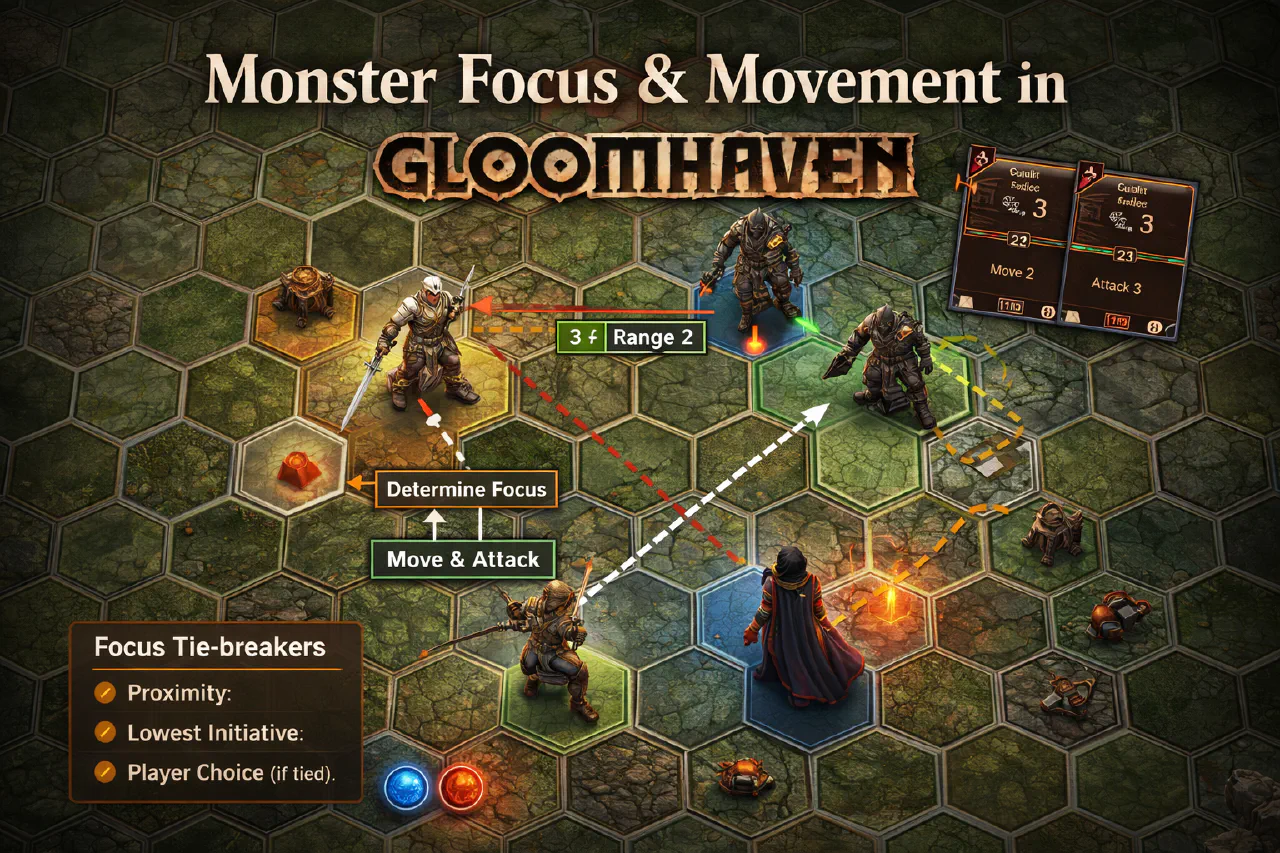
Monster Focus & Movement in Gloomhaven (Beginner Flowchart + Examples)
Learn exactly how monsters choose focus, where they move, and when they stop. Spoiler-free, rules-accurate, with a simple flowchart and common edge cases.
How Monster Ability Cards Work (Why Enemies Feel Swingy)
A clear, beginner-friendly explanation of Gloomhaven monster ability cards: what they do, how they determine monster actions, and why enemy behavior sometimes feels unpredictable.
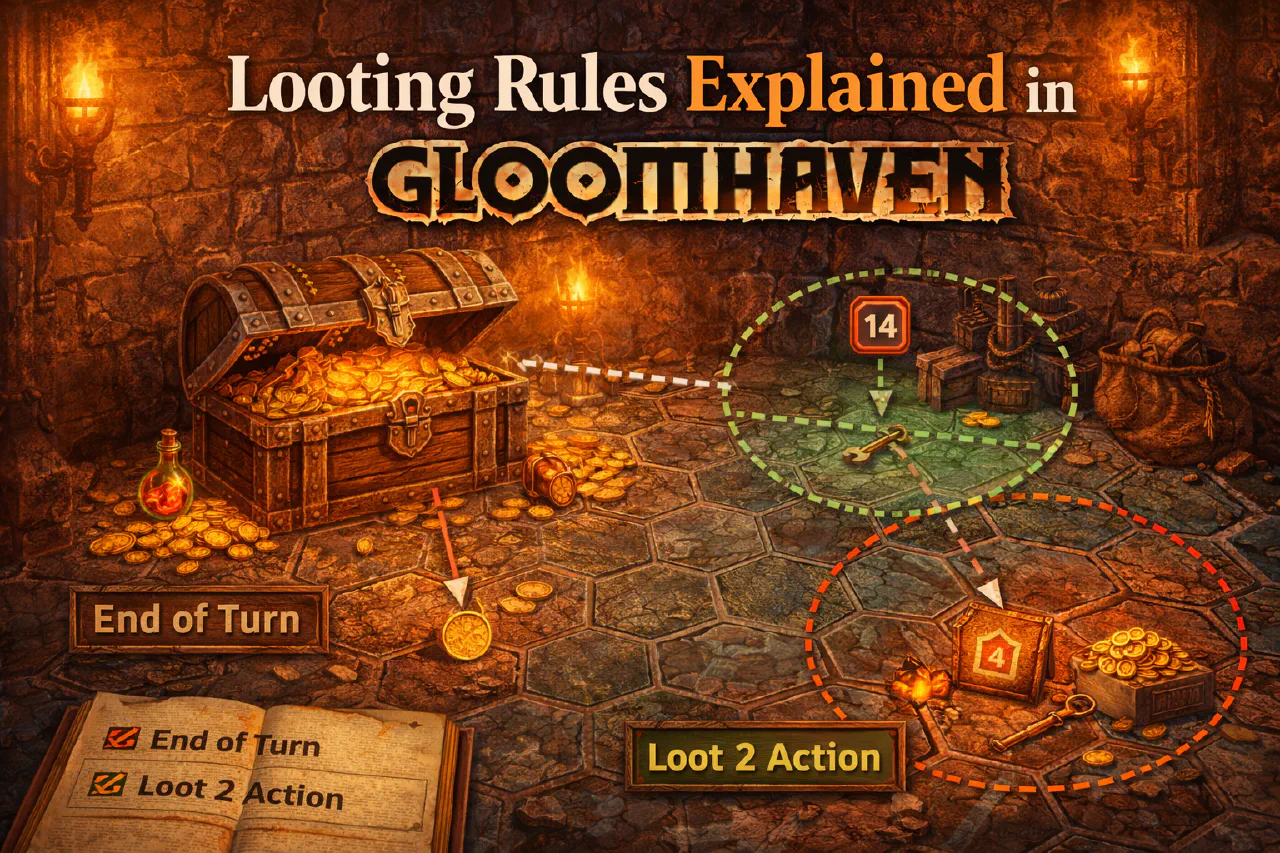
Looting Rules Explained in Gloomhaven — Timing, Range, and Greed
A clear, spoiler-free guide to how looting works in Gloomhaven: how you pick up coins and treasure tiles, when looting happens, how range works, and practical tips to make sure you don’t miss out.
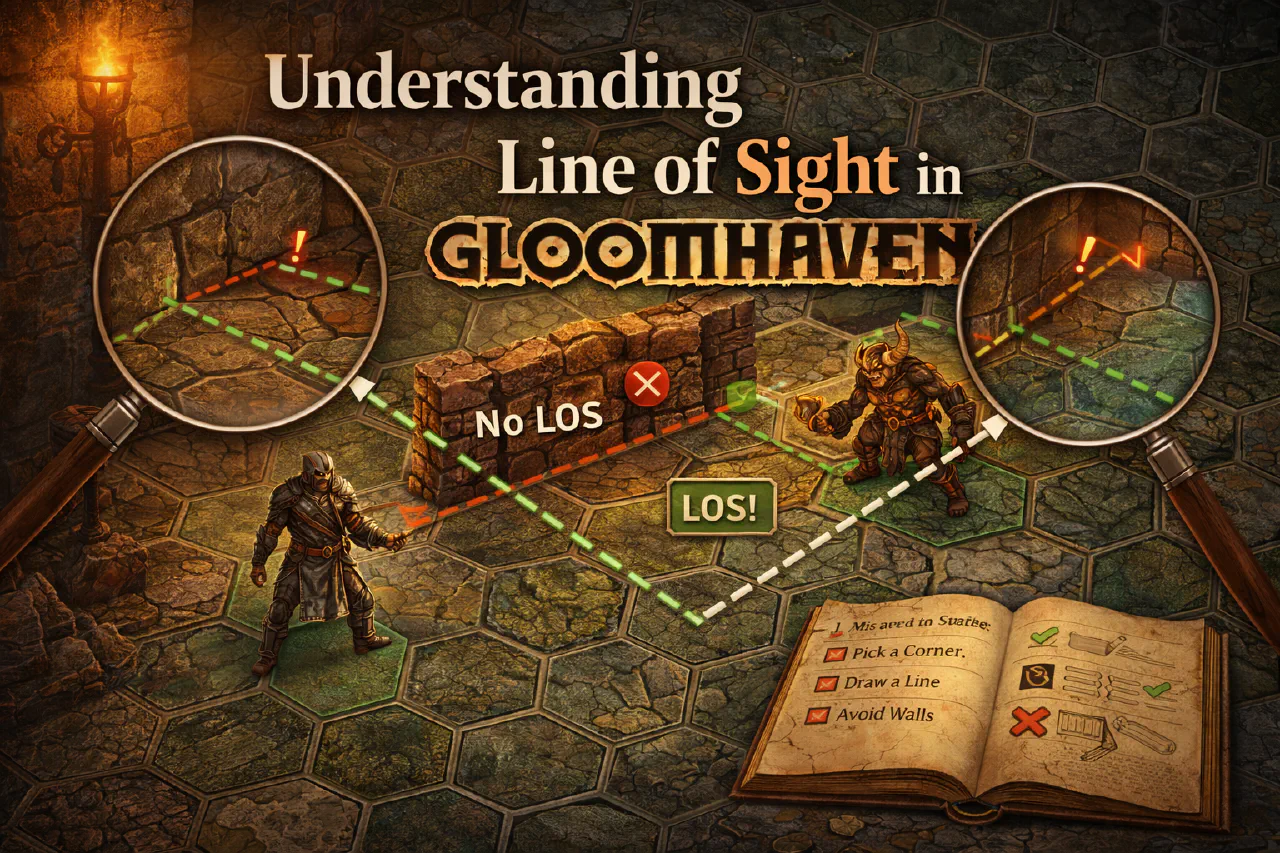
Gloomhaven Line of Sight: Walls, Corners and Jaws of the Lion Rules
Check line of sight in Gloomhaven and Jaws of the Lion with hex diagrams, game-specific targeting rules, and clear examples of what blocks an attack.
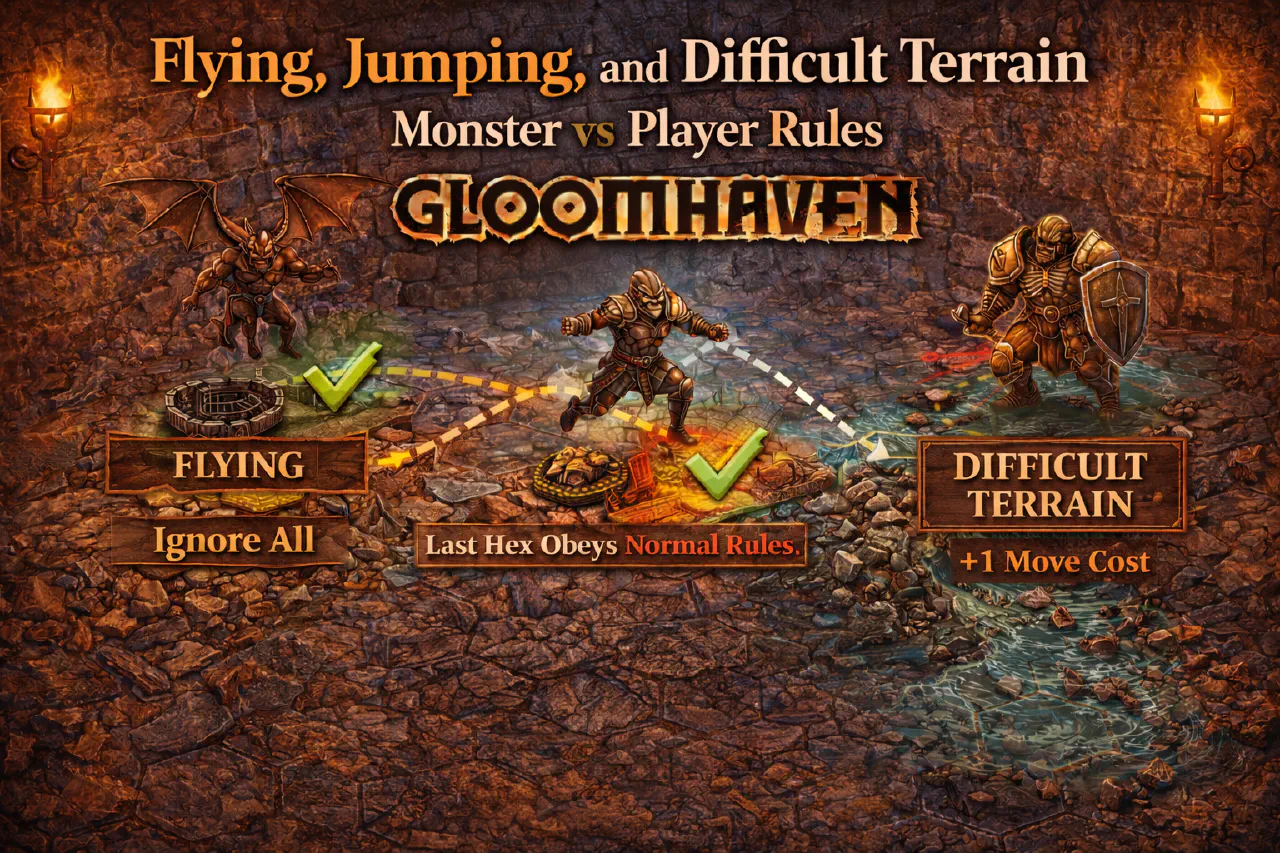
Gloomhaven Jump vs Flying: Difficult Terrain, Traps and Movement
Learn how Jump, Flying, difficult terrain, and traps interact in Gloomhaven, including the different jump landing cost in Jaws of the Lion.
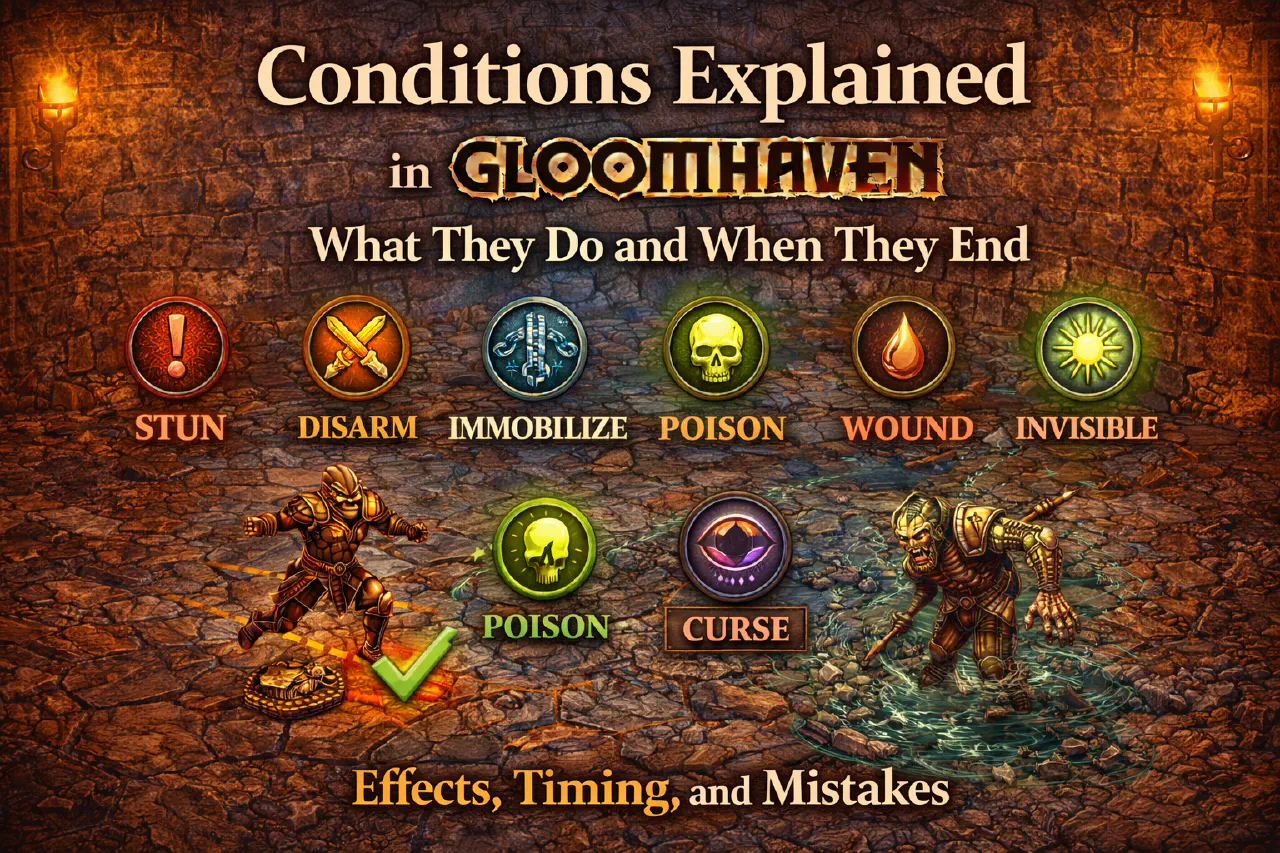
Conditions Explained in Gloomhaven (What They Do and When They End)
A clear, beginner-friendly guide to all conditions in Gloomhaven: what each condition does, when it applies, when it is removed, and common rules mistakes.