
On this page
You’ve been playing Gloomhaven (or Jaws of the Lion), every turn feels smart, and yet — scenarios still slip through your fingers. Many players blame bad luck or unlucky ability draws, but more often the real cause comes down to common, repeatable mistakes that quietly destroy your momentum.
This article highlights the errors that tend to end scenarios early — and how to avoid them.
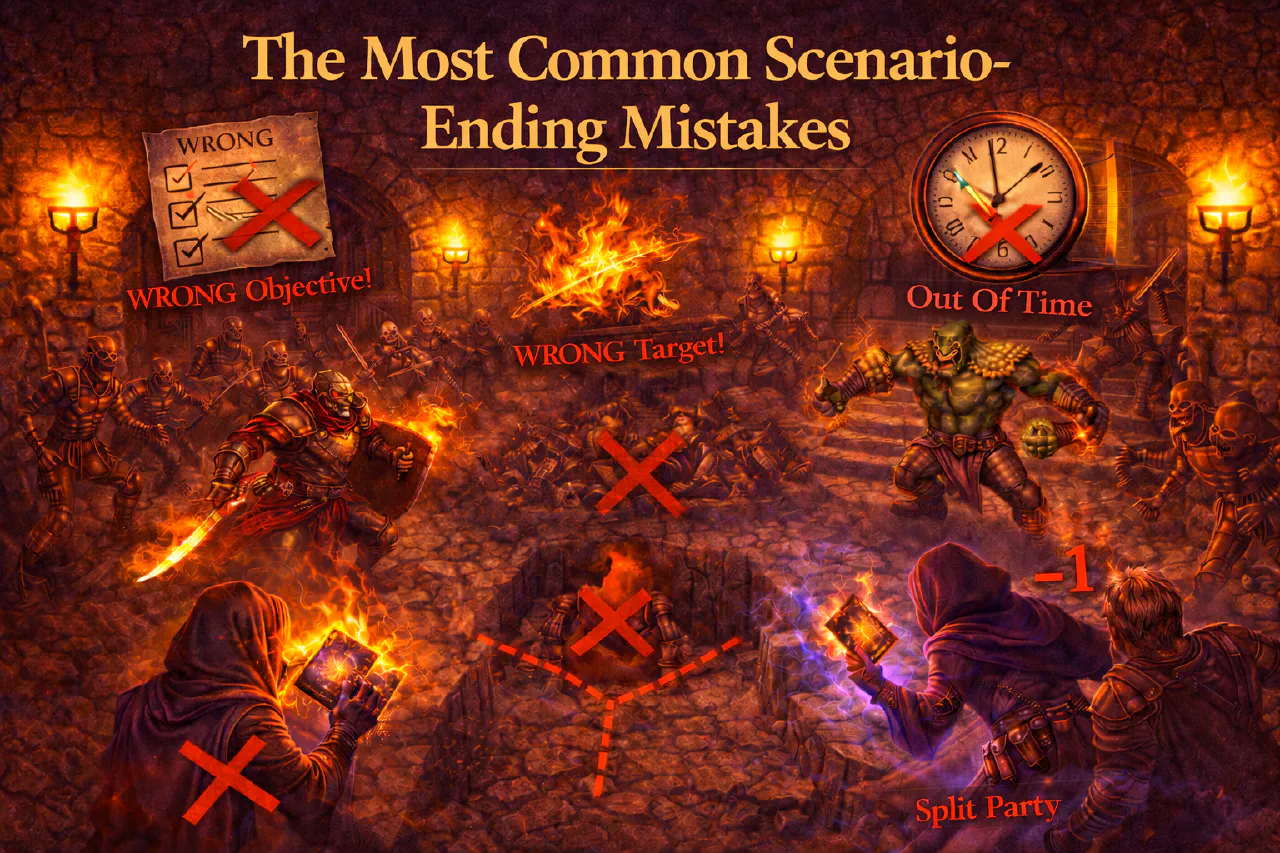
1. Ignoring the Scenario’s True Objective
Probably the number one killer of plans is this: assuming the goal of the scenario is the same as “kill everything on the map.”
In many scenarios:
- You need to reach an exit by turn X
- You need to defend an objective for X rounds
- You must avoid taking damage instead of killing enemies
- You must interact with specific tiles or objects
If you treat every scenario like a “clear the room” battle, you’ll burn time, resources, and stamina on enemies that don’t matter. Re-read the objective every turn to avoid this trap.
2. Overextending Into Unfavorable Positions
Effective positioning in Gloomhaven is about risk management, not just offense:
- Advancing too far ahead of your party opens you to multiple enemies at once
- Being surrounded massively increases incoming damage
- Without shield or control effects, being out of formation destroys stamina
A single out-of-position character often means multiple lost cards or early exhaustion.
3. Burning Cards Without Strategic Purpose
Burning cards is sometimes necessary but doing it without a tactical reason is a common mistake:
Players often burn:
- to avoid a hit that doesn’t really change threat levels
- because they feel like they should burst
- early in the scenario before pressure actually builds
This leaves them with fewer options later when a burn really matters — like finishing a dangerous enemy, reaching an objective in time, or avoiding a scenario loss.
Burns should always be used for outcome-changing moments, not momentary comfort.
4. Focusing the Wrong Enemy Targets
Not all enemies matter equally in every round.
Common targeting mistakes:
- Chasing down weak enemies while a strong one approaches your party
- Spreading damage thin instead of focusing down high-impact threats
- Ignoring enemies that block paths or objectives
Effective focus fire means prioritizing:
- High damage enemies
- Ranged attackers targeting squishier allies
- Monsters that can flank or break formations
If you pick the wrong fights, the scenario’s pressure escalates faster than your party’s ability to respond.
5. Misusing Initiative
Initiative is not just who goes first — it’s a tactical tool.
Mistakes include:
- Always picking low initiative because it feels safe
- Picking high initiative too often and letting enemies act first
- Not coordinating initiatives within the party
Good initiative plays:
- Let you position before dangerous monsters act
- Allow control effects to land before attacks
- Force enemies into suboptimal movement
Using initiative poorly can turn a manageable room into a disaster before you even get to act.
6. Failing to Create Choke Points
Gloomhaven is fundamentally about tactical space control. If you fight in open areas without chokepoints:
- Enemies surround your party
- Incoming attacks multiply rapidly
- Shielding and positioning break down quickly
Always look to:
- Funnel enemies into narrow hallways
- Hold doorways rather than forward hexes
- Use obstacles to limit how many foes can attack you simultaneously
Scenarios are often lost not by damage, but by allowing enemy numbers to act unhindered.
7. Not Reading Monster Behavior
Monsters follow strict rules — they do not act randomly. They:
- Focus on certain characters
- Move toward reachable attack positions
- Follow ability cards in a predictable pattern
A common mistake is treating monster behavior as chaos rather than deterministic movement based on ability draws and pathfinding. When you learn monster patterns, you plan — instead of react.
8. Healing Too Often
Healing isn’t inherently bad — but in early or mid-scenario turns, healing can slow progress significantly.
Common healing mistakes:
- Healing damage that doesn’t threaten exhaustion
- Healing instead of advancing the objective
- Forcing rests mid-scenario instead of pushing forward
Always ask: Is this heal buying time or wasting it?
9. Ignoring Terrain and Line of Sight
Terrain and line of sight are major tactical factors. Ignoring them can mean:
- Unnecessary movement costs
- Leaving enemies with optimal firing lines
- Exposing party members through poor angles
Good parties use terrain to:
- Block enemy movement
- Deny enemies line of sight
- Control engagement ranges
Poor terrain usage often results in avoidable damage and worse positioning.
10. Splitting the Party Without a Plan
Splitting the party isn’t always a mistake — but doing it without a clear purpose is.
Scenarios that force splits require:
- Clear pathways for regroup
- Knowledge of enemy distribution
- Risk management for smaller groups
When you split with no plan, every subgroup gets overwhelmed and you lose momentum on both sides.
11. Mismanaging Card Economy
Gloomhaven scenarios aren’t just encounters; they are resource management problems:
- How many cards can we lose this round?
- Do we need to short or long rest soon?
- Does a heal save more card loss than a burn costs?
Misjudging these questions often results in early exhaustion — and exhaustion ends scenarios fast.
12. Failing to Adapt Mid-Scenario
Scenarios aren’t static. A plan that worked early might be irrelevant mid-scenario because:
- Enemies engaged differently than expected
- Initiative patterns changed
- Objective timing tightened
When the situation shifts, and you keep executing the original plan, you often lose. Adaptation is key to survival.
Final Thoughts
Losing a scenario doesn’t always mean you played poorly — it means one or more critical tactical decisions weren’t optimal given the scenario’s conditions.
If you’re losing even when you feel you’re “playing correctly,” ask:
- Are you prioritizing the objective?
- Are you managing time and resources?
- Are you using initiative and positioning effectively?
- Are you anticipating monster behavior?
Finding which mistake caused your loss is the real key to turning defeats into wins.
Next reads
Keep going with spoiler-light, practical guidance.
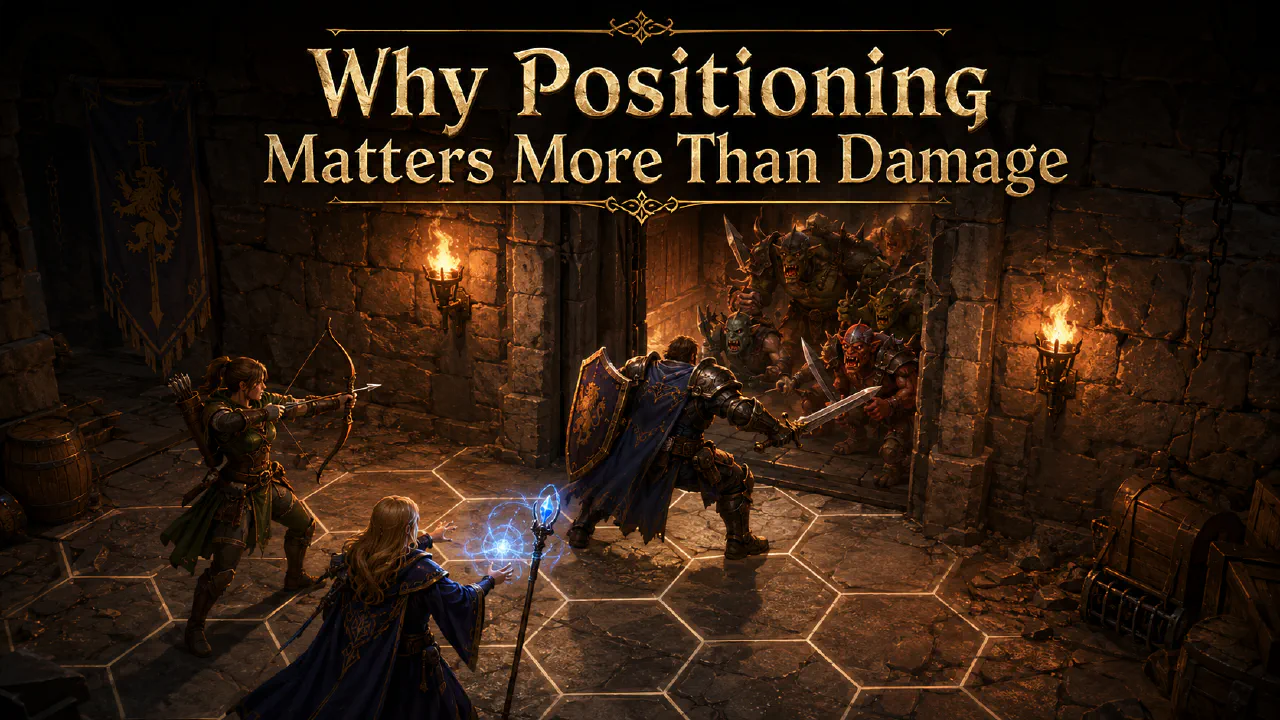
Why Positioning Matters More Than Damage
Learn why positioning is often more important than raw damage in Gloomhaven and Jaws of the Lion. A beginner-friendly guide to safer turns, better movement, and smarter scenario play.
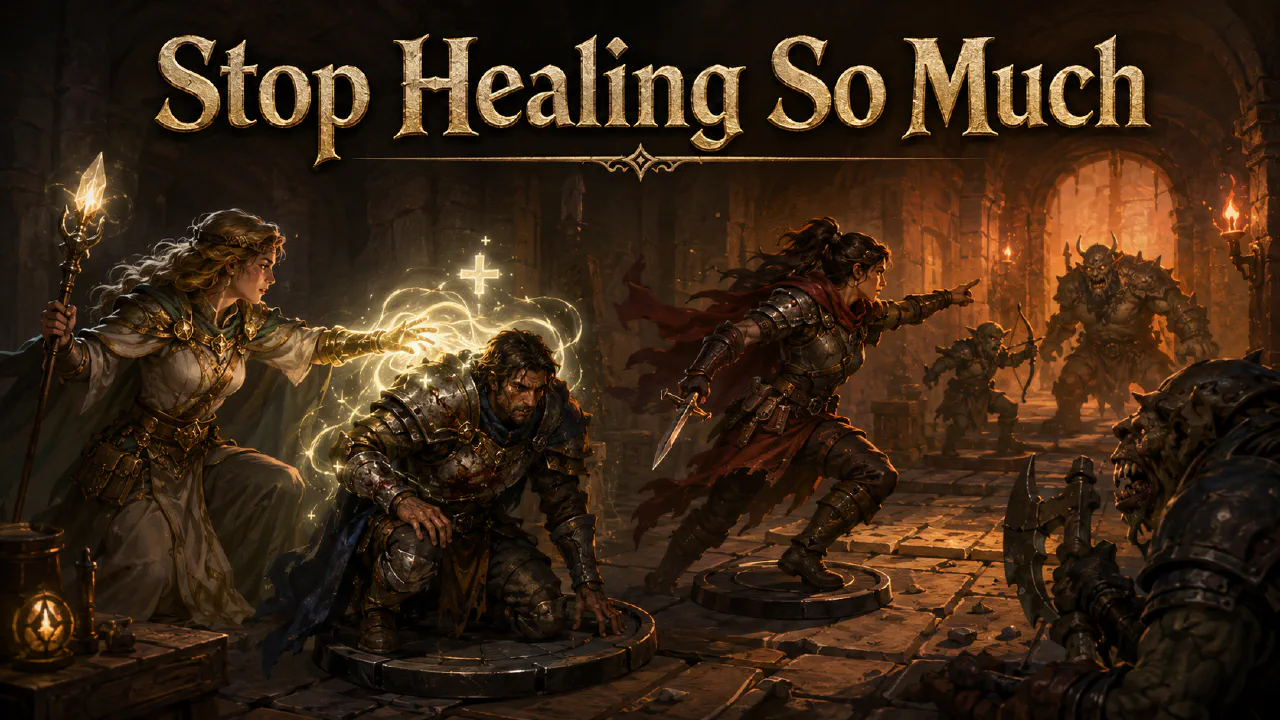
Stop Healing So Much
Healing feels safe in Gloomhaven, but it can quietly cost you scenarios. Learn when healing is worth it, when it wastes tempo, and why preventing damage is usually stronger.
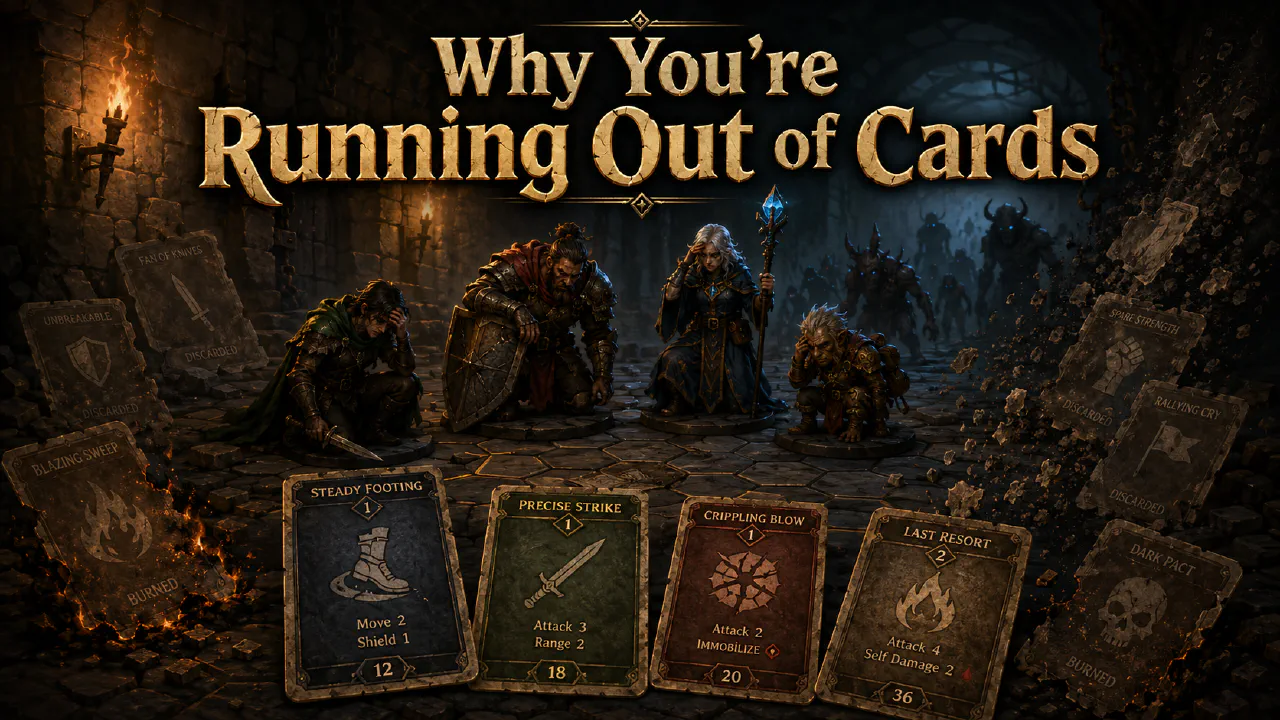
Running Out of Cards in Gloomhaven? Exhaustion and Card Management
Learn why you exhaust in Gloomhaven and Jaws of the Lion, how early loss cards reduce your turns, and how to finish scenarios with better card management.
How to Win Scenarios With Tight Time Limits
Practical strategies for beating time-limited scenarios in Gloomhaven and Jaws of the Lion. Learn pacing, card management, initiative control, and when to push instead of fight.
Split-Party Scenarios: Stay Alive While Divided
How to survive split-party scenarios in Gloomhaven and Jaws of the Lion. Learn role assignment, pacing, initiative control, and regrouping tactics to avoid getting overwhelmed.
Why You’re Losing Scenarios Even When Playing ‘Correctly’
Explore common hidden reasons players lose Gloomhaven and Jaws of the Lion scenarios despite thinking they are playing correctly. Learn tactical, strategic, and game-mechanic blind spots that often determine losses.