
On this page
Game and scope: Jaws of the Lion with its original components. This guide covers starting-class mechanics and practical decisions, without later-level unlocks or a level-by-level build. During scenarios 1–5, follow the Learn to Play Guide as it introduces cards and rules.
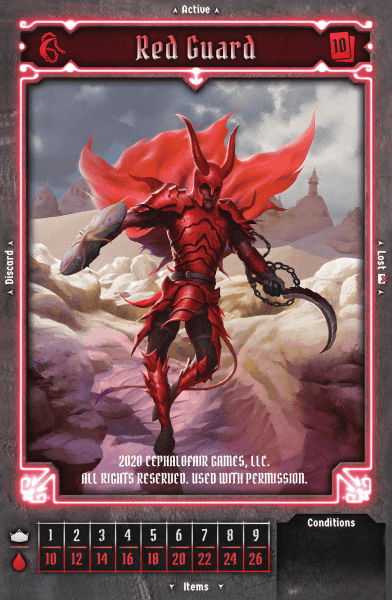
Red Guard combines attacks, positioning, and defense. The full hand limit is 10, with 10 HP at level 1. Higher health helps you accept pressure, but there is no automatic tank-targeting rule.
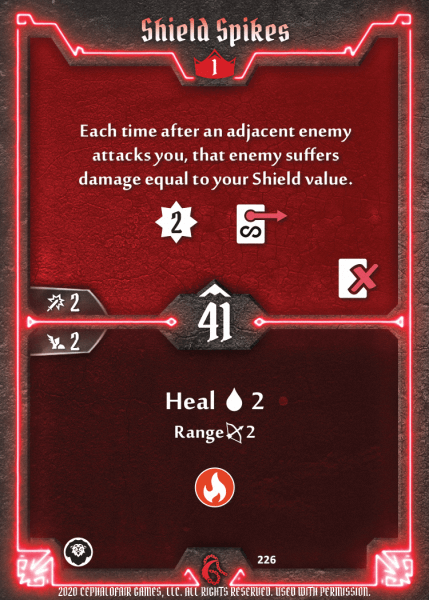
Shield Spikes is its own effect
The top of level 1 Shield Spikes creates a persistent loss effect: after an adjacent enemy attacks you, that enemy suffers damage equal to your Shield value. It does not grant Shield by itself. It also does not say Retaliate; apply its own trigger and damage calculation rather than importing the original game’s Retaliate rules.
Because this is suffered damage rather than an attack, it does not draw an attack modifier and the enemy’s Shield does not reduce it. It is triggered by an attack, rather than by the amount of damage you actually take. A zero-damage attack can still trigger it.
The bottom of Shield Spikes is instead Heal 2, Range 2, with Fire infusion. Using that bottom does not activate the persistent top effect.
A legal starting-card pairing
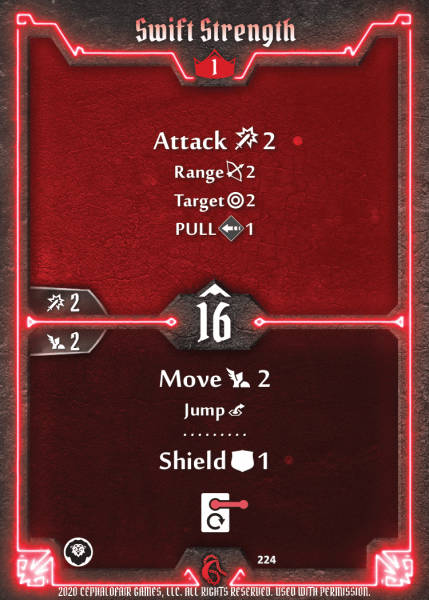
Level 1 Swift Strength has Move 2 with Jump, followed by Shield 1 for the round, on its bottom. Pair that bottom with Shield Spikes’ top to move, gain Shield, and establish the persistent effect. These are different cards, so the top-and-bottom pairing is legal.
On that turn, Shield 1 reduces each applicable incoming attack by 1, and an adjacent enemy that attacks you suffers 1 damage from Shield Spikes. The temporary Shield ends at round end; the persistent effect remains. You need another Shield source on a later round if you want it to deal damage then.
Protect allies using actual focus rules
In Jaws, monsters first minimize movement needed to attack, then use initiative order to break focus ties. There is no extra proximity tie-breaker. A monster already in range of several characters may prefer an earlier-initiative ally even if you are closer.
Count legal attacking positions and enemy abilities before taking a doorway. Ranged enemies can shoot past you. Shield protects the figure receiving it; it does not automatically protect an adjacent ally or objective.
Keep attacks and movement useful
Plan round-duration Shield before the attacks it needs to reduce. Do not surround yourself merely to trigger Shield Spikes more often: remaining damage can still force card losses or exhaustion. Choose perks from the original Jaws sheet and items from the unlocked Jaws supply. Card enhancement is not part of the standalone Jaws campaign.
A useful first full-hand plan
Before selecting cards, identify the attacks you expect to face and decide whether you need an early defensive effect or a productive attack before those enemies act. You commit initiative before monster cards are revealed, so keep a fallback within the chosen pair.
Example: Shield before two attacks
Assume Shield Spikes is already active. Swift Strength’s bottom gives you Shield 1 this round. Two adjacent enemies then each make an attack with a modified value of 3. With no other effects, each attack deals 2 damage to you, and each attacker suffers 1 damage from Shield Spikes.
You took 4 damage to deal 2 in return. Whether that was worthwhile depends on what the position enabled. It is not automatically a good trade just because the persistent effect triggered twice. If the attacks would force you to lose cards, removing one attacker or choosing a safer hex may serve the party better.
A ten-card hand still needs recovery windows
Activating Shield Spikes leaves its card in your active area. Rests recover discards, not that active card. Avoid adding several other early losses unless they save enough time or danger to justify the shorter endurance.
Healing Sands and Shield Spikes’ bottom are different card actions from the persistent Shield Spikes top. If you choose a healing turn, check which halves remain available and whether the party still needs you to move or attack. A long rest’s Heal 2 can also matter, but Poison removes the healing benefit until Poison is cleared.
For partners, Red Guard and Hatchet offer a clear starting division of work. With Voidwarden, also plan where you need to stand to make a granted attack useful. A support turn is strongest when its recipient has a legal target.
Sources
The publisher’s Jaws Glossary, particularly Ability Card, Monster Focus, Shield, Heal, and Rest; and the following reproductions of the actual game components (hosted by Worldhaven):
Next reads
Keep going with spoiler-light, practical guidance.
Best Two-Character Parties in Jaws of the Lion
Compare all six Jaws of the Lion character pairings, with beginner recommendations, party strengths, positioning advice, and pitfalls for two players or solo play.
Jaws of the Lion Voidwarden Guide: Granted Attacks and Starting Tactics
A starting-class Voidwarden guide for Jaws of the Lion: granted attacks, Master Influence, modifier decks, and positioning.
Jaws of the Lion Hatchet Guide: The Favorite and Starting Tactics
A starting-class Hatchet guide for Jaws of the Lion: The Favorite, Retrieval, ranged attacks, and safe positioning.
Jaws of the Lion Demolitionist Guide: Starting Cards and Positioning
A starting-class Demolitionist guide for Jaws of the Lion: melee positioning, obstacles, direct damage, and card endurance.